
Brazil Crypto Tax 2025: A Complete Guide



Cryptocurrency continues to evolve in Brazil alongside new legislation and ever-expanding public adoption. Whether you’re a casual investor, professional trader, or experimenting with DeFi, understanding your crypto tax obligations is crucial to stay compliant and avoid errors with the Receita Federal (Brazilian Federal Revenue). This comprehensive guide explains how crypto is taxed in Brazil in 2025, covering all essential rules, updates, and practical examples. You’ll find current tax rates, declaration deadlines, crypto losses, and strategies for navigating DeFi and cross-border rules. We’ll also discuss the best practices for recordkeeping, alert you to recent legislative changes, and introduce helpful tools like the WEEX Tax Calculator to streamline your tax reporting.
Do You Pay Cryptocurrency Taxes in Brazil?
Is crypto taxable in Brazil?
Yes, cryptocurrencies are taxable in Brazil. Since 2019, the Receita Federal (RFB) has made it clear that all Brazilian residents must report and, when applicable, pay taxes on cryptocurrency transactions and holdings. Crypto is treated as a movable asset—similar to property—and not as currency, with specific rules covering sales, trades, staking rewards, income, and assets held abroad.
When does tax apply to crypto transactions?
Tax does not apply to all crypto activity. The most significant trigger is when your sales or similar disposals of crypto in a given month exceed BRL 35,000 (~USD 6,900 as of 2025) and produce a gain. In other words, small investors who sell (or swap) less than this threshold in any given month and realize a profit are not subject to capital gains tax for those transactions. However, there’s a separate rule for cryptocurrencies held or transacted abroad—since January 2024, assets abroad exceeding BRL 6,000 may also be subject to tax.
Scenarios that result in taxation
Here’s a quick overview of common crypto transactions and their tax treatments:
Transaction Type | Is It Taxable? | Tax Implications |
| Buy crypto with BRL/fiduciary | No | No immediate tax; must be declared if cost > BRL 5,000 |
| Sale for BRL | Yes if sales > BRL 35,000/mo | Capital gains tax applies on net profit |
| Crypto-to-crypto swap | Yes if sales > BRL 35,000/mo | Capital gains tax applies on net profit |
| Gift or transfer | No (but still declare asset ownership) | May be subject to donation/gift tax if recipient |
| Payment for goods/services | Yes | Taxed as income at applicable income tax rate |
| Staking or mining rewards | Yes | Treated as income, taxed at rates up to 27.5% |
| Hold (no transaction) | No | Only declaration required if value > BRL 5,000 |
| Loss on sale | No (but eligible for loss offset) | Can offset against future gains (see Losses section for details) |
| Assets held abroad > BRL 6,000 | Yes (since Jan/2024) | Tax applied on gain up to 22.5%, reduced exemption threshold |
Understanding these categories will help you determine when you should report transactions and whether tax is due based on your activity.
How Much Tax Do You Pay on Crypto in Brazil?
The Brazilian crypto tax system mixes elements of capital gains tax and regular income tax, depending on the nature of your transaction and where the assets are held.
Capital gains tax on crypto sales and swaps
If you sell or swap crypto (including crypto-to-crypto) and your total disposals for the month are above BRL 35,000, any gain is subject to capital gains tax. Compare this to many other countries with much lower or no minimum exemption thresholds—Brazil favors small investors with this relatively high limit.
The tax rate follows a progressive system based on the value of the gain in a given month:
Capital Gain Range (BRL) | Tax Rate |
| Up to 5,000,000 | 15% |
| 5,000,001 to 30,000,000 | 17.5% |
| Above 30,000,000 | 22.5% |
For most retail participants, the 15% rate will apply. Over-the-counter (OTC) transactions, regardless of size, are taxed at a straightforward 15%.
Example: Calculating capital gains tax
Suppose Maria sold BRL 50,000 worth of Bitcoin in July 2025, having previously purchased it for BRL 40,000. Her gain is BRL 10,000. Since she exceeded the BRL 35,000 threshold and the gain is under BRL 5,000,000, she will pay a 15% tax, totaling BRL 1,500, due by the last business day of the following month.
Taxation of cryptocurrency held abroad
Since 2024, legislation tightened the rules for assets outside Brazil. Now, crypto held abroad is taxed when gains exceed BRL 6,000 within a year. The capital gains tax rate can reach up to 22.5% on larger gains, meaning effective rates may be higher than for assets held domestically.
Asset Type | Exemption Threshold | Tax Rate (on gains) |
| Domestic crypto disposals | BRL 35,000/month | 15–22.5% |
| Foreign crypto disposals | BRL 6,000/year | Up to 22.5% |
Income tax on crypto earnings
Not all crypto revenue comes from buying and selling. If you earn crypto through mining, staking, payments for work, or airdrops, these are treated as income for tax purposes.
The tax rate follows the same progressive brackets as standard income, ranging from 7.5% up to 27.5%, after allowable deductions:
Monthly Taxable Income (BRL) | Tax Rate | Deduction (BRL) |
| Up to 1,903.98 | Exempt | 0 |
| 1,903.99 – 2,826.65 | 7.5% | 142.80 |
| 2,826.66 – 3,751.05 | 15% | 354.80 |
| 3,751.06 – 4,664.68 | 22.5% | 636.13 |
| Above 4,664.69 | 27.5% | 869.36 |
Example: Receiving staking rewards
If João receives the equivalent of BRL 700 per month in staking rewards and has a regular monthly salary of BRL 3,000, his crypto income is added to his total income and taxed at the applicable marginal rate.
Exemptions and exceptions
Not all crypto transactions are taxable in Brazil, with key exemptions including:
- Purchases with fiat currency (BRL or other official money): No tax applies, though reporting is often required.
- Monthly disposals ≤ BRL 35,000 domestically: No capital gains tax applies to small sales.
- Asset holdings (holding without disposing): No property or annual holding tax.
Always remember: even when no tax is due, you may still have to report your holdings or activity if they exceed certain acquisition thresholds.
Can the Receita Federal Track Crypto?
Crypto “feels” anonymous, but in Brazil, monitoring of digital assets is robust—and growing stronger with each legislative update.
Reporting requirements for exchanges
Since August 2019, Brazil’s Receita Federal requires all domestic exchanges to report detailed customer transaction histories. Foreign exchanges operating in Brazil are also compelled to submit records upon official request. The data provided typically includes transaction date, value, wallet addresses, asset type, and personal identification.
Blockchain transparency
Beyond centralized reporting, blockchains themselves are public ledgers. Brazilian authorities have invested in sophisticated analytical tools that can link wallet addresses to individuals using a combination of exchange/KYC data and blockchain analytics.
Individual responsibilities
For transactions on platforms outside Brazil (including DeFi and foreign exchanges), you are required to self-report activity if your monthly transactions exceed BRL 30,000. These disclosures, known as IN 1.888, help the RFB cross-check transactions that might otherwise fall outside domestic reporting.
Practical example: Tracking a cross-border transfer
If you transfer 2 ETH from your self-custody wallet to a foreign exchange and sell it for USDT, you are responsible for declaring this movement and disposition if your total sales/trades exceed the BRL 30,000 threshold in that month. Failure to disclose does not guarantee invisibility—if the foreign exchange is later served with a data request, or if you move funds back into the Brazilian banking system, the RFB can detect discrepancies.
How Is Crypto Taxed in Brazil?
Brazil’s crypto tax framework splits into capital gains taxes for asset disposals, income tax for crypto-derived revenue, and special reporting for overseas assets. Below, we break down each element in detail.
Capital gains on sales and swaps
When you dispose of crypto—selling for BRL or another official currency, or even swapping it for another token—capital gains tax applies if your total monthly disposals exceed BRL 35,000. The calculation is straightforward but requires diligent record-keeping:
- Sum all sales and swap transactions for the month.
- If total value received > BRL 35,000, determine gain for each transaction.
- Calculate capital gain as [Sale Price] – [Cost Basis + Transaction Fees].
- Apply relevant progressive rates (15–22.5%).
Tax Treatment of Swaps (Crypto-to-Crypto)
Since 2022, swapping one cryptocurrency for another—such as trading ETH for BTC—is also viewed as a taxable event. You must determine the BRL equivalent for both the asset given up and the asset received at the time of the trade.
Example: Crypto-to-crypto trade
If Carla purchased 1 ETH for BRL 9,000 and later swaps it for 0.02 BTC valued at BRL 12,500 at the time of the swap, she has a BRL 3,500 gain. However, if this swap is her only crypto transaction of the month, and the total value is below BRL 35,000, she owes no tax—but must still keep detailed records.
Taxation of overseas assets
From January 2024 onward, crypto assets held abroad face lowered exemption limits—only BRL 6,000 per year—and increased top rates of up to 22.5%. This change targets expatriates, digital nomads, and those trading frequently on global platforms.
Location of Asset | Exemption Threshold | Monthly or Annual | Top Tax Rate |
| Brazil | BRL 35,000 | Monthly | 22.5% |
| Abroad | BRL 6,000 | Annual | 22.5% |
Reporting and payment obligations
- Annual capital gains above exemption: Must be reported on the GCAP schedule and paid by the last business day of the month after the transaction.
- Large monthly foreign transfers (>BRL 30,000): Require monthly reporting via IN 1.888 by the last business day of the following month.
- Yearly summary: All cryptocurrency assets with a cost basis above BRL 5,000 must be disclosed in your IRPF (annual income tax return).
Income from cryptocurrencies
Mining, staking, validator rewards, and tokens received for services count as income at the BRL market value on the day received. Add this amount to other taxable income for the year; the total will determine your final tax bracket.
Non-taxable events
Certain scenarios are not taxable—but often still require reporting:
Scenario | Do You Pay Tax? | Reporting Required? |
| Purchase with fiat | No | Yes, if >BRL 5,000 |
| Holding (no transaction) | No | Yes, if >BRL 5,000 |
| Transfer between own wallets | No | No (if within same owner) |
| Losses (see below) | No | Yes, for offsetting future gains |
Brazil Income Tax Rate
The taxation of crypto income—whether from employment, freelance work, mining, staking, or similar sources—falls under the general income tax regime. The Brazilian Income Tax calculation considers progressive brackets, allowing for deductions and credits.
Brazilian Income Tax Brackets for 2025
Monthly Taxable Income (BRL) | Income Tax Rate | Deductible Value (BRL) |
| 0 – 1,903.98 | 0% (Exempt) | R$ 0 |
| 1,903.99 – 2,826.65 | 7.5% | R$ 142.80 |
| 2,826.66 – 3,751.05 | 15% | R$ 354.80 |
| 3,751.06 – 4,664.68 | 22.5% | R$ 636.13 |
| Above 4,664.69 | 27.5% | R$ 869.36 |
Example: Taxation of freelance crypto payments
If an independent contractor is paid BRL 4,000 per month in crypto for their work, the applicable rate would be 22.5%, after factoring in deductions. The BRL value is determined on the date of receipt using the fair market exchange rate.
Calculating taxable crypto income
When you receive crypto as payment, reward, or compensation:
- Determine its BRL market value on the date received.
- Add it to your total taxable income for the year.
- Apply deduction if eligible.
- Calculate income tax based on the applicable bracket.
Crypto Losses in Brazil
Brazilian tax policy has improved flexibility regarding losses since 2024, especially for investments and trades involving assets abroad.
Offsetting and carrying forward losses
If you incur losses—either from selling crypto at a loss or from lost/irretrievably stolen coins—you may be able to offset these against current or future capital gains from crypto transactions:
Loss Scenario | Can Offset Gains? | Conditions |
| Loss from sale (Brazil/abroad) | Yes | Same or subsequent calendar years |
| Theft/hack/irretrievable loss | Unclear/subjective | Seek advice from accountant |
| Losses below exemption threshold | N/A | No gains/taxes triggered |
Example: Offsetting gains
Amanda realized a BRL 15,000 gain in January 2025 and a BRL 10,000 loss in February 2025. She can offset the loss against January’s gain, potentially reducing her taxable gain for the year.
Documentation for losses
Retaining evidence of losses—including transaction records, exchange statements, and (for theft/hacks) police or support reports—is essential and can be required if audited.
Defi Tax
Decentralized finance (DeFi) protocols, platforms, and tokens are now commonplace in Brazil, but tax guidance is still evolving. However, the Receita Federal treats DeFi income similarly to other crypto income forms.
How DeFi activities are taxed
DeFi Activity | Typical Tax Treatment | Reporting Deadline |
| Lending (yield farming) | Income tax on rewards earned | Annual/Monthly |
| Staking | Income tax on rewards, same as above | Annual/Monthly |
| Swapping tokens | Capital gains tax if over threshold | Annually (GCAP), or monthly for big transactions |
| Providing liquidity | Gains on withdrawal may be taxed | Annual, per disposal event |
DeFi makes tracking cost bases more complex due to frequent small transactions. Proper use of crypto tax software or detailed spreadsheets is recommended.
Real-world analogy
Think of DeFi platforms as similar to managed investment funds. When you receive interest or yield, it’s like earning dividend income—taxed when received. When you remove your stake and realize a gain, it’s similar to selling shares and owing capital gains.
Weex Exchange: Reliability and Innovation for Crypto Traders
As the Brazilian crypto ecosystem becomes more sophisticated, choosing the right exchange becomes crucial for maintaining security and compliance. WEEX stands out in the market for its reliable platform and innovative approach to trading and asset management. Whether you are an experienced investor or just beginning your crypto journey, WEEX’s commitment to top-tier security measures and user-centric features helps ensure that your transactions remain smooth and your records accessible when needed for tax reporting. Their emphasis on transparency and robust reporting infrastructure aligns well with Brazil’s evolving regulatory landscape.
Simplify Your Taxes with the Weex Tax Calculator
Staying compliant with Brazil’s crypto tax laws can be challenging, especially when juggling transactions across multiple exchanges, blockchains, or complex DeFi protocols. The WEEX Tax Calculator is a valuable resource for users seeking efficiency and accuracy. Designed to help you estimate your potential capital gains, taxable income, and other crypto-related taxes, this calculator provides up-to-date computations tailored to Brazilian regulations. Remember that while the WEEX Tax Calculator offers helpful estimates, it is not a substitute for professional tax advice.
Try it here: [https://www.weex.com/tokens/bitcoin/tax-calculator](https://www.weex.com/tokens/bitcoin/tax-calculator)
Frequently Asked Questions
What cryptocurrencies are subject to tax in Brazil?
All cryptocurrencies are subject to taxation under Brazilian law when sold for fiat or swapped for other tokens, as long as the exemption thresholds (BRL 35,000 for domestic and BRL 6,000 for foreign assets) are surpassed in a calendar period. This includes popular assets like Bitcoin, Ethereum, and stablecoins, as well as tokens acquired through airdrops, mining, or staking. Holding crypto alone is not taxable, though declaration may be required for holdings over BRL 5,000 in acquisition value.
How do I calculate my crypto tax liability?
To calculate your crypto tax liability, follow these steps:
- Aggregate all monthly disposals (sales, swaps, etc.) and compare against exemption thresholds.
- For taxable transactions, subtract your cost basis (acquisition cost plus any allowable fees) from your disposal price to calculate net profit.
- For income events (mining, staking, payments), determine the BRL market value on receipt and add to your total taxable income for the year.
- Apply the appropriate tax rate—capital gains rates (15–22.5%) or income tax brackets (up to 27.5%)—to calculate how much you owe.
- Don’t forget to account for eligible offsets if you have recognized losses.
What records should I keep for crypto taxes?
You should maintain precise and detailed records for every crypto transaction, both for your own reference and to satisfy any future audit requests by the Receita Federal. At minimum, keep:
- Dates of each transaction (buy, sell, swap, reward, etc.)
- Description and quantity of assets involved
- Value in BRL at transaction date (exchange rate source)
- Details of all transaction fees
- Exchange statements and wallet transaction IDs
- Documentation of any lost, stolen, or irretrievable crypto
- Monthly and annual summaries as declared to authorities
When are crypto taxes due in Brazil?
Key dates to remember for Brazilian crypto tax compliance in 2025:
- Annual declaration: Last business day of April, for all crypto assets and gains in the preceding year.
- Monthly IN 1.888 declaration: Required if your transactions on foreign platforms exceed BRL 30,000 in a month—due by the last business day of the next month.
- Capital gains tax payment: Due by the end of the month following the taxable event, generally paid with a DARF form.
Late filings can result in penalties, interest, and possible future scrutiny of your returns, so mark these deadlines clearly.
What happens if I don’t report crypto taxes?
Failure to report your crypto activity or pay due taxes can result in significant penalties. The Receita Federal has access to a wide range of transaction data and cross-border exchange reports, making enforcement more effective each year. Non-compliance may lead to:
- Fines (typically a percentage of the undeclared tax, plus daily interest)
- Increased chance of audit or further investigations
- Potential criminal tax evasion charges in extreme cases
It is always best to voluntarily comply, maintain accurate records, and seek professional assistance for complex or high-volume transactions.
By keeping up-to-date with Brazil’s new crypto legislation, maintaining records, and using reliable platforms like WEEX to streamline your compliance, you will be well-positioned to make the most of the opportunities in the crypto market while staying on the right side of the law. If in doubt, consult a professional accountant specializing in crypto assets.
You may also like
WEEX Copy Trading vs Bitget Copy Trading: Which is Better 2026?

How to Trade Tesla (TSLA) Futures on WEEX: Complete Guide for 2026
What Is Polymarket? A Beginner's Guide to Decentralized Prediction Markets

How to Trade Crude Oil Futures on WEEX: Complete 2026 Guide
Futures Trading Strategies: How to Master Futures Trading in 2026
TradFi on WEEX: Bridging Crypto and Traditional Finance
TradFi perpetual contracts are reshaping how crypto traders access traditional markets, blending the speed of digital assets with assets like gold, stocks, and commodities. On platforms like WEEX, these USDT-settled derivatives let you trade without holding the underlying assets, offering no-expiration leverage similar to crypto futures. This article breaks down what TradFi means on WEEX, its benefits for beginners, key differences from other platforms, and strategies to get started. Whether you're new to crypto or looking to diversify, you'll find insights on fees, asset types, and risk management. To dive in, you can access a crypto trading platform like WEEX for seamless TradFi trading.
KEY TAKEAWAYSTradFi perpetual contracts on WEEX provide 24/7 access to traditional assets like gold and stocks using USDT, eliminating the need for separate brokerage accounts.Key benefits include flexible leverage up to 400x for commodities, unified trading in a crypto-native interface, and tools for hedging across markets.Fees involve trading costs at entry/exit and periodic funding rates, which traders should monitor to optimize short-term versus long-term positions.Compared to CFD-based platforms, WEEX TradFi offers adjustable leverage and deeper order books, making it more intuitive for crypto users.Always assess risks like volatility and liquidation, using stop-loss orders to manage exposure in this high-leverage environment.Understanding TradFi Perpetual Contracts on WEEXTradFi, short for traditional finance, refers to conventional markets like stocks, commodities, and forex. When integrated with crypto through perpetual contracts on WEEX, it creates a hybrid where traders use USDT to speculate on price movements without owning the assets. These contracts mirror crypto perpetuals: they have no expiration, allow leverage, and settle in real-time. For instance, you might trade gold's price swings amid inflation news, all within your existing crypto account.
This setup emerged as crypto infrastructure matured, allowing platforms to track traditional assets accurately. According to a 2024 report from Deloitte on blockchain in finance, such derivatives have grown 150% in adoption since 2023, driven by demand for 24/7 trading. On WEEX, TradFi perpetual contracts cover categories like precious metals (gold, silver), stocks (e.g., TSLA, AAPL), and commodities (oil, natural gas), sourced from multiple data feeds for reliable pricing.
What sets WEEX TradFi apart is its crypto-native design. Unlike traditional brokers with rigid hours, WEEX enables trading during off-market times for some assets, though liquidity varies. Crypto analyst Jane Doe from Chainalysis noted in a recent interview, "TradFi perpetuals like those on WEEX are democratizing access, letting retail traders hedge against global events without fiat hassles." This aligns with the trend toward unified financial systems, where boundaries between crypto and TradFi blur.
Key Assets Available in WEEX TradFi TradingDiving into the assets, WEEX TradFi opens doors to forex pairs like EUR/USDT, ideal for tracking currency shifts tied to central bank policies. Commodities such as crude oil respond to geopolitical tensions, offering diversification from volatile crypto holdings. Stocks, meanwhile, let you bet on company earnings without shareholder rights, with prices syncing to real markets during U.S. sessions.
A 2025 Bloomberg report highlights that commodity trading volumes in crypto derivatives surged 200% last year, citing energy market instability. On WEEX, these are traded via perpetual contracts, supporting long or short positions. For beginners, start with familiar assets like gold, which often acts as a safe haven during crypto downturns. The platform's interface displays real-time mark prices from sources like CME Group, ensuring transparency.
Consider how stocks behave across sessions: during U.S. market hours (9:30-16:00 ET), liquidity is high with minimal spreads, per WEEX's trading data. Off-hours see wider fluctuations, useful for anticipating news. This structure helps crypto traders apply skills like technical analysis to TradFi, creating cross-market strategies.
Comparing WEEX TradFi to Other PlatformsWEEX TradFi stands out by using USDT-margined perpetual futures, unlike CFD models on platforms like Bybit or Bitget, which often require MT5 terminals and separate accounts. WEEX integrates everything into one app, with adjustable leverage—up to 400x for forex versus fixed rates elsewhere. A table below illustrates key differences based on platform rules as of April 2026:
CategoryWEEX TradFiOther CFD PlatformsAccount SetupExisting WEEX accountSeparate account requiredLeverageAdjustable (up to 400x)Fixed, non-adjustableMargin ModeCross/isolated supportedCross onlyFee StructureDynamic funding ratesFixed overnight feesInterfaceNative app/webOften requires external toolsThis data, drawn from official platform announcements, shows WEEX's edge for crypto users. Expert Tom Lee from Fundstrat commented in a 2026 CNBC segment, "Platforms like WEEX are leading the charge in making TradFi accessible, reducing barriers that traditional CFDs impose." The unified balance inclusion means your USDT counts toward all positions, streamlining capital use.
For those used to crypto volatility, WEEX's multi-tier order books allow precise limit orders, unlike the best-bid/ask execution in CFDs. This fosters better risk control, especially in liquid markets like forex.
Fees and Costs in WEEX TradFi: What Beginners Need to KnowFees in WEEX TradFi include trading fees (0.01% example on a 10,000 USDT position equals 1 USDT) charged at open and close, and funding fees settled every 4-8 hours. Positive rates mean longs pay shorts, balancing the market. A study by the CFA Institute in 2025 found that understanding these can cut holding costs by 20% for swing traders.
Short-term trades often dodge funding impacts, while longer holds accrue costs, especially overnight. Check the order page for real-time rates, as they vary by asset and user tier. Promotional events might lower fees, per WEEX announcements.
To minimize expenses, time entries around low-funding periods and use isolated margins to limit risk per trade. This approach turns fees into a manageable part of your strategy, rather than a surprise drag on returns.
Strategies for Trading TradFi Perpetual Contracts on WEEXBuilding a strategy starts with diversification: pair crypto holdings with TradFi assets for hedging. For example, short oil during supply gluts to offset crypto dips tied to energy costs. Use leverage wisely—begin at 5-10x to test waters, scaling up as confidence grows.
Monitor global news; a Federal Reserve rate hike could boost USD pairs. WEEX's tools like stop-loss help automate exits, preventing liquidation. As crypto researcher Alex Johnson from Messari stated in a 2026 blog, "TradFi perpetuals enable macro plays that pure crypto can't match, like betting on inflation via gold."
Analyze patterns: commodities trend with seasons, stocks with earnings. Combine this with crypto indicators for hybrid setups, always sizing positions to your risk tolerance.
Risks and Risk Management in WEEX TradFiHigh leverage amplifies gains but also losses, with volatility from market hours adding unpredictability. Liquidation occurs if margins drop below maintenance levels, based on multi-source mark prices.
Mitigate by diversifying across asset types and setting take-profit orders. A 2026 IMF report warns of systemic risks in hybrid markets, urging education. For beginners, paper trade first to grasp dynamics without real capital at stake.
Ultimately, TradFi on WEEX bridges worlds, but success hinges on disciplined approaches, not speculation.
As you explore these opportunities, consider the WEEX Token (WXT) for potential platform benefits. New users can also look into the WEEX welcome bonus, which offers rewards like trading coupons for tasks such as deposits and initial trades.
DISCLAIMER: WEEX and affiliates provide digital asset exchange services, including derivatives and margin trading, only where legal and for eligible users. All content is general information, not financial advice-seek independent advice before trading. Cryptocurrency trading is high risk and may result in total loss. By using WEEX services you accept all related risks and terms. Never invest more than you can afford to lose. See our Terms of Use and Risk Disclosure for details.
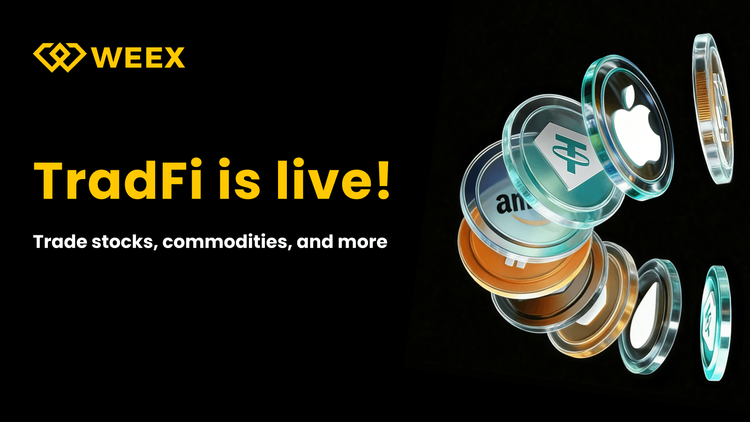
What Is TradFi in Crypto? How to Trade Traditional Assets with USDT on WEEX
Many crypto beginners struggle to understand how to access traditional markets like gold, US stocks, oil, and forex without going through banks or complex brokerage systems—this gap is exactly where TradFi in crypto comes in.
If you seek a simple way to access these assets without banks or brokers, or if you already trade crypto and want broader diversification, this guide will help you understand how TradFi works and how platforms like WEEX integrate everything into a single trading environment. To begin, you can register on WEEX and complete your account setup.
KEY TAKEAWAYSTradFi in crypto connects traditional markets (stocks, gold, oil, forex) with crypto trading toolsUsers can trade global assets using USDT without banks or brokersWEEX TradFi enables unified trading of crypto and traditional assets in one accountTrading involves fees and funding costs that vary by market conditionsLeverage and 24/7 access make TradFi attractive for active tradersWhat Is TradFi in Crypto?TradFi is shorthand for Traditional Finance, representing the legacy systems of stocks, bonds, and commodities. When we talk about "TradFi in crypto," we refer to the integration of these real-world assets into a blockchain-native trading environment. This is typically achieved through perpetual contracts that track the price of the underlying asset.
By using a crypto-native platform, you bypass the friction of traditional banking. Instead of waiting days for a bank wire to clear at a brokerage, you use USDT to instantly open positions on the S&P 500 or precious metals. This provides traders with the speed of decentralized finance combined with the stability of established global markets.
Why Trade Traditional Assets with USDT?The primary motivation is efficiency. Traditional brokerage accounts often require extensive documentation, high minimum balances, and are restricted by regional regulations. Trading with USDT levels the playing field, allowing anyone with a crypto wallet to participate in global price movements. You gain 24/7 control over your collateral, even when traditional exchanges are closed for the weekend.
Unified liquidity is another major factor. On a single platform, you can hedge your Bitcoin positions by long-positioning Gold or short-positioning tech stocks during an economic downturn. This consolidation reduces the risk of capital being fragmented across multiple platforms, allowing for more strategic and faster risk management decisions.
What Is WEEX TradFi and Why Choose WEEX TradFiWEEX TradFi is built to bring global financial markets into a unified crypto-native trading environment, allowing users to access assets such as gold, oil, forex, indices, and US stocks directly using USDT within a single account system. Unlike other platforms where TradFi products follow a traditional CFD brokerage logic—often requiring external MT5 terminals—WEEX emphasizes "crypto-native consistency." This means you maintain the same account habits, trading logic, and asset perspective you use for Bitcoin or Ethereum futures.
The reason to choose WEEX TradFi global asset trading lies in its lower migration cost and centralized trading path. You don't need to learn a new set of rules for traditional markets; instead, you leverage your existing knowledge of USDT-margined perpetuals to capture opportunities in global macro trends. Below is an overview of the key markets available:
td {white-space:nowrap;border:0.5pt solid #dee0e3;font-size:10pt;font-style:normal;font-weight:normal;vertical-align:middle;word-break:normal;word-wrap:normal;}
Market Category
Representative AssetsDescriptionForex
EUR/USDT, GBP/USDTTrade major currency pair price fluctuations.Commodities
Gold, Silver, Crude Oil, Natural GasFocus on precious metals and energy trends.Stocks
TSLA, AAPL, MSFT, AMZNTrade price changes of trending global stocks.How to Trade Gold, Oil & Stocks with USDT on WEEX TradFiStep 1 – Create a WEEX AccountRegistering on WEEX is simple and fast. You only need an email or mobile number to get started. Unlike traditional brokers that require lengthy verification, WEEX allows users to access markets quickly. It is recommended to enable two-factor authentication (2FA) for account security.
Step 2 – Deposit USDT with 0% FeeFor a seamless start, use the Quick Buy on WEEX feature to instantly convert fiat currency into USDT. This is the fastest way for beginners to fund their accounts without dealing with external wallets. Simply select your preferred local currency and payment method to have USDT delivered directly to your account.
Step 3 – Start Trading Traditional Asset Contracts on WEEX TradFiOnce your USDT is ready, navigate directly to the Futures trading page. WEEX supports a wide range of traditional financial token contracts, including Gold, Silver, Crude Oil, general Commodities, and Global Stock Indices. Choose your preferred market—such as trade PAXG/USDT on WEEX for digital gold exposure—set your leverage, and place your order. This integrated flow allows you to switch between crypto and traditional assets instantly as market opportunities arise.
Risks of Trading TradFi PerpetualsTrading traditional assets with leverage involves significant risk. Unlike spot trading, perpetual contracts allow for liquidation if the price moves against your position beyond the maintenance margin. Volatility in the forex or commodity markets can be triggered by sudden geopolitical shifts, requiring traders to remain vigilant even during periods of low crypto market activity.
Counterparty risk is also a factor to consider in any centralized environment. It is essential to use platforms with a proven track record of security and transparency. While TradFi assets offer stability compared to some altcoins, individual stocks can still experience "gaps" in price during market opens or earnings releases, which may impact the effectiveness of stop-loss orders.
FAQWhat is WEEX TradFi and how does it work?TradFi refers to traditional financial assets integrated into the crypto ecosystem. WEEX offers TradFi perpetual futures, allowing you to trade products such as Gold, Silver, Crude Oil, various Commodities, and Global Indices using USDT as collateral.
Is TradFi available for 24/7 trading?Yes, TradFi futures support 24/7 trading. However, due to weekend and holiday closures in traditional markets, liquidity may be lower during those periods.
What assets can I trade on WEEX TradFi?Gold, oil, forex, stocks, and indices are commonly supported.
How do I start trading on WEEX TradFi?Simply deposit USDT into your WEEX account and enter the futures trading section. You can immediately choose assets like precious metals, commodities, or stocks and start trading without additional conversion steps.
ConclusionBridging the gap between blockchain and traditional finance offers a powerful way to navigate global economic trends. By using USDT to trade gold, oil, and stocks, you enjoy a level of flexibility and speed that legacy systems simply cannot match. WEEX provides the necessary infrastructure to manage these diverse assets within a single, secure environment.
As you expand your trading horizons, consider the utility of the WEEX Token (WXT) for potential fee discounts and ecosystem benefits. For those new to the platform, the WEEX welcome bonus provides an excellent starting point with various task-based rewards to support your initial trades.
Stay updated with the latest market insights and exclusive rewards — Follow WEEX on X and join the WEEX Telegram Group
DISCLAIMER: WEEX and affiliates provide digital asset exchange services, including derivatives and margin trading, only where legal and for eligible users. All content is general information, not financial advice—seek independent advice before trading. Cryptocurrency trading is high risk and may result in total loss. By using WEEX services you accept all related risks and terms. Never invest more than you can afford to lose. See our Terms of Use and Risk Disclosure for details.

TradFi vs DeFi Explained: Key Differences and How WEEX TradFi Bridges Both Worlds
Modern investors are often frustrated by the friction of traditional banking—slow settlements, high entry barriers, and rigid trading hours—while simultaneously struggling with the complexity of managing fragmented portfolios across multiple wallets and brokers. This article breaks down the key differences between TradFi and DeFi in a simple way and explains how WEEX TradFi connects both worlds by enabling access to traditional assets using USDT inside a crypto-native trading environment.
Key TakeawaysTradFi relies on centralized institutions and regulatory frameworks, while DeFi uses smart contracts to remove intermediaries.TradFi markets like stocks and forex operate on fixed hours, whereas DeFi protocols offer 24/7 global accessibility.Asset tokenization is bridging the gap, allowing traditional commodities like gold and oil to trade on blockchain rails.WEEX TradFi provides a unique hybrid experience, allowing users to trade global traditional assets using a crypto-native USDT balance.What Is TradFi and DeFi?Traditional Finance (TradFi) and Decentralized Finance (DeFi) are two core systems shaping today’s financial landscape. As crypto markets expand, a new concept—TradFi in crypto—has emerged, where traditional assets are accessed through blockchain-based platforms. One example is WEEX TradFi, which integrates global markets into a USDT-based trading environment.
Definition of Traditional Finance (TradFi)TradFi refers to the conventional financial system built around centralized institutions such as banks, brokerage firms, and regulated exchanges. It covers markets like stocks, forex, bonds, and commodities. In this system, users depend on intermediaries for custody, settlement, and transaction execution, and all activities are governed by regulatory frameworks.
Definition of Decentralized Finance (DeFi)DeFi is a blockchain-based financial system that removes traditional intermediaries by using smart contracts. It enables users to trade, lend, borrow, and earn yield directly on-chain through decentralized applications. Access is open and permissionless, meaning anyone with a crypto wallet can participate without institutional approval.
What is TradFi in Crypto and WEEX TradFiAs TradFi anf Defi collide, a new category known as "TradFi in Crypto" has emerged. This refers to the practice of trading traditional financial instruments—such as gold, oil, and stocks—using the infrastructure and efficiency of the cryptocurrency market. Platforms like WEEX TradFi are leading this charge, allowing users to leverage their crypto balances to gain exposure to global traditional markets within a single, high-speed trading interface.
Side-by-Side: Key Characteristics of TradFi vs DeFiThe most fundamental difference lies in the governance and trust models. Here is a clear breakdown of how TradFi vs DeFi compare across key operational dimensions:
td {white-space:nowrap;border:0.5pt solid #dee0e3;font-size:10pt;font-style:normal;font-weight:normal;vertical-align:middle;word-break:normal;word-wrap:normal;}
Feature
TradFi (Traditional Finance)DeFi (Decentralized Finance)Governance
Centralized (Banks/Institutions)Decentralized (DAO/Code)Access
Permissioned (KYC Required)Permissionless (Wallet Based)Trust Model
Institutional TrustAlgorithmic Trust (Smart Contracts)Settlement
T+2 or T+3 DaysNear-Instant (On-chain)Innovation
Slow (Regulated)Fast (Open Source)Transparency
Low (Internal Audits)High (Public Ledger)This structural difference creates two distinct environments: one focused on stability and oversight, the other on speed, openness, and programmatic execution. While TradFi trusts the banker, DeFi trusts the math.
TradFi vs DeFi Asset Access and Market StructuresTradFi centers on stocks, forex, and commodities accessed through siloed brokerage accounts and banks. DeFi uses wallet-based entry for crypto assets and liquidity pools. The rise of RWA (Real World Asset) tokenization is now allowing traditional products to appear on-chain, lowering barriers for retail investors.
Technical Analysis: Trading Mechanisms of TradFi vs DeFiTradFi relies on centralized order books where the exchange matches buyers and sellers in a "black box" settlement process. DeFi utilizes Automated Market Makers (AMMs) and smart contracts. Every transaction is recorded on a public ledger, offering real-time transparency and auditability that TradFi cannot match.
Global Access: TradFi vs DeFi Market Hours and AccessibilityTradFi markets follow fixed business hours and close on weekends/holidays, creating pricing gaps. DeFi protocols operate 24/7 without downtime, allowing traders to respond to global events instantly. Continuous access redefines risk management, moving away from traditional "opening bells" toward a true global utility.
Security Profiles: Risk and Transparency in TradFi vs DeFiTradFi risk is institutional (counterparty/systemic) but offers regulatory safety nets. DeFi transparency is absolute via open-source code, but users face smart contract vulnerabilities and personal security responsibilities. The paradigm shifts from institutional trust to algorithmic security.
The Hybrid Solution: How WEEX TradFi Bridges TradFi vs DeFiAs the industry matures, hybrid solutions like WEEX TradFi combine the best of both systems. It offers crypto-native access to traditional assets like gold, oil, and global stock indices. By integrating these markets into a unified blockchain-based platform, it solves fragmentation and eliminates the need for multiple brokers or complex bank wires.
Instead of managing separate accounts, you can trade these assets using your USDT balance. This one-click transition provides 24/7 accessibility with the liquidity of established financial products. You can even trade PAXG/USDT on WEEX to gain exposure to digital gold, bridging physical and digital worlds instantly.
FAQWhat is TradFi and what products are supported on WEEX TradFi?TradFi refers to traditional financial assets such as stocks, commodities, and forex. WEEX TradFi supports perpetual futures for gold, silver, crude oil, diverse commodities, and global indices, all tradable with USDT.
Can I trade stocks on WEEX 24/7?Yes, while stock tokens track the price discovery of US markets, you can manage your positions, set orders, and adjust your portfolio on WEEX 24/7, even when traditional exchanges are closed.
Is trading TradFi on a crypto platform safer than a broker?It offers a different risk profile. While you lose the traditional banking safety net, you gain instant settlement, 24/7 fund control, and a unified collateral system that traditional brokers cannot provide.
Do I need a bank account for WEEX TradFi?No. One of the biggest advantages is that you only need USDT to trade. You can bypass the need for a traditional bank account or a specific stock brokerage account.
DISCLAIMER: WEEX and affiliates provide digital asset exchange services, including derivatives and margin trading, only where legal and for eligible users. All content is general information, not financial advice—seek independent advice before trading. Cryptocurrency trading is high risk and may result in total loss. By using WEEX services you accept all related risks and terms. Never invest more than you can afford to lose. See our Terms of Use and Risk Disclosure for details.

Crunch Time for the CLARITY Act: What’s in Store for Crypto?
The CLARITY Act, the most closely watched piece of crypto legislation in the U.S. history, has entered its final sprint.
Over the past few months, questions such as who should receive stablecoin yields, how to allocate liability in DeFi, and whether traditional banks would suffer a “bloodletting” have repeatedly stalled the bill. It wasn’t until recently that the deadlock was truly broken. Senator Thom Tillis confirmed on Monday that he and Senator Alsobrooks have been in talks with various parties for months and have finally produced a proposal that is broadly acceptable to all sides.
So, what exactly does the long-delayed CLARITY Act entail? And if it passes, what changes will it bring to the crypto market? This article provides an in-depth breakdown.
CLARITY Act Overview: Establishing Compliance and ClassificationThe Digital Asset Market Clarity Act (CLARITY Act) is the most ambitious attempt at crypto industry regulation by the U.S. Congress to date.
The bill passed the House of Representatives in July 2025 but has been stalled for an extended period due to disputes in the Senate.
Simply put, the bill primarily covers three key areas:
First, it clarifies the regulatory boundaries between the SEC and the CFTC. This is one of the most challenging issues facing those U.S. crypto companies. Currently, there is an overlap in the SEC and CFTC’s functions regarding the classification of digital assets, leaving companies facing long-standing uncertainty regarding their “regulatory status” from a compliance perspective.Second, establishing a regulatory framework for stablecoins. The bill imposes restrictions on stablecoin yields, but more crucially, it expands the scope of coverage—unlike the GENIUS Act signed in 2025, which targeted only issuers, the CLARITY Act extends to a broader range of entities, including trading platforms and wallet service providers, thereby filling a legislative gap.Third, strengthening investor protection and disclosure requirements. The bill strengthens the legal basis for holding parties accountable for fraudulent transactions, clarifies the criteria for determining market manipulation, and restricts insiders from abusing non-public information for illegal gains.Additionally, federal regulators will issue a stablecoin disclosure framework and a list of compliance activities within one year of the bill’s passage, establishing a more predictable compliance roadmap for the industry’s development.
The Key Compromise: How Does the Stablecoin Yield Provision Balance the Interests of Both Sides?It is clear that the biggest stumbling block preventing this bill from moving forward has been the issue of stablecoin yields—specifically, where the money comes from and whether it will siphon deposits away from banks—which has long been a major point of contention between the traditional banking sector and the crypto industry.
The key to breaking this deadlock lies in the compromise text on stablecoin yields reached by Senators Thom Tillis and Angela Alsobrooks. The provision explicitly prohibits crypto companies from paying “any form of interest or yield” (i.e., similar to bank deposits or interest-bearing products without cause) solely because customers hold stablecoins. However, it preserves room for rewards based on “real activity,” such as trading rebates, membership benefits, and on-chain interaction incentives.
Traditional banks have long feared that high-yield stablecoins would erode their deposit base, leading to massive capital outflows. This ban directly positions stablecoins as “payment tools” rather than “savings products,” effectively putting their minds at ease.
On the other hand, while crypto project teams cannot directly pay interest, they can still gain market share through product innovation, boosting user engagement, and expanding use cases.
In my view, this compromise may appear to be a mere semantic game on the surface, but it effectively amounts to a “redefinition of function”—stablecoins have shifted from their previous role as “savings-like assets” seeking risk-free returns back to that of “base money” for payments, settlements, and ecosystem incentives. However, the exact criteria for determining “real activity” remain vague, and this is likely to become a new battleground for all parties vying for regulatory interpretation in the future.
Following the key compromise, the probability of the bill being signed into law in 2026 surged to 70% on the prediction market Polymarket, setting a monthly high. https://polymarket.com/event/clarity-act-signed-into-law-in-2026
With the implementation of this compromise, the probability of the bill being signed into law in 2026 on the prediction market Polymarket briefly surged to 70%, setting a monthly record.
However, on the very day this article was written, U.S. banking trade groups still stated that the Senate’s stablecoin incentive compromise was “not sufficient”—they fear that the wording of the ban is not firm enough and that disguised economic incentives might emerge.
Clearly, this battle is far from over.
What Changes Will the Crypto Market See?In fact, on every level, the CLARITY Act is more than just a simple update to regulatory terminology; it marks a landmark shift for the U.S. crypto market as it moves from a “pilot phase” to “institutionalization,” and the crypto market will benefit from this.
Leading compliance players see a revaluation: As a leader in compliant stablecoins, Circle (CRCL) is one of the bill’s biggest beneficiaries, with its stock surging 20% on Monday alone. As interest income from reserve assets grows and USDC continues to expand its market share across multiple use cases, Circle’s profit outlook is expected to become increasingly clear, enabling its transformation from a “crypto cyclical stock” to a “Web3+AI infrastructure stock.”Stablecoin ecosystem stands to benefit directly: Stablecoins are explicitly defined as “payment tools” rather than “deposit-like products.” This represents a major boon for cross-border payments, the tokenization of RWA (real-world assets), and AI-driven business models, helping to revitalize sectors such as DeFi, PayFi, and RWA.Overall market sentiment is improving: As a “macro-level” development, the CLARITY Act will further boost risk appetite as btc-42">Bitcoin recently rebounded to the $80,000 mark.The next two weeks will be a critical window for the CLARITY Act’s passage. The crypto industry has made clear concessions regarding the flexibility of financial products to alleviate the concerns of the traditional financial system. This concession is not a retreat, but a strategic trade-off.
Of course, this does not mean everything is settled—the banking sector continues to question the boundaries of “real-world activities,” and regulatory responsibilities for DeFi have not yet been fully clarified. But at the very least, for the entire crypto industry, a “clear bill” that can be implemented is more important than a “perfect bill.” And the active progress being made at this stage is itself a sign that crypto assets are moving toward a mature capital market.
What Are TradeFi Perpetual Contracts? Complete Guide 2026
If you trade crypto on WEEX, you already know how perpetual contracts work. No expiry. USDT settled. Leverage up to your risk tolerance.
Now imagine trading gold, oil, or Tesla stock the exact same way.
That is what TradeFi Perpetual Contracts on WEEX do. They bring traditional markets into your crypto workflow.
Let us break down what are tradfi perpetual contracts, how stock tokens work, and when you should care about trading hours.
What Are TradeFi Perpetual Contracts on WEEX?TradeFi perpetual contracts on WEEX are USDT-settled futures that track the price of traditional financial assets — stocks, commodities, precious metals.
You do not own the underlying asset. You just trade its price movement.
Same margin system as crypto perpetuals on WEEX. Same funding rates. Same liquidation logic.
But there is one difference: the asset behaves like traditional markets, not crypto.
What you can trade on WEEX:Precious metals (gold, silver)Commodities (oil, natural gas)Stocks (Tesla, Apple, NVIDIA)Key features on WEEX:24/7 access – No waiting for NYSE to openNo expiry – Hold as long as you wantUp to 400x LeverageUSDT settled – No currency conversionSo how do tradfi perpetual contracts work on WEEX? Exactly like crypto perps. But the price source changes.
What Are Stock Tokens on WEEX?Stock tokens on WEEX are digital assets pegged to real stock prices. Think of them as a tracking device, not the actual stock.
If Tesla moves 5% in Nasdaq, the Tesla stock token on WEEX moves 5%.
Advantages of TradFi Perpetual Contract on WEEXThis is where tradfi perpetual contracts 24/7 trading on WEEX gets interesting.
Because stock tokens track real stocks, their volatility depends on whether the US stock market is open.
Period (ET)VolatilityLiquidityWhat happens on WEEXTrading hours (9:30 AM – 4:00 PM)LowHighTight spreads, price tracks closelyPre/after market (4:30 AM – 9:30 AM & 4:00 PM – 8:00 PM)HighMediumPrice jumps possible, fewer ordersMarket closed (weekends/holidays)Potentially highLowNo real price reference. News can cause big movesWhy this Matters for You on WEEXIf you trade during US market hours, expect smooth price action.
If you trade pre-market or weekends on WEEX, you are betting on sentiment without live price feeds. That cuts both ways.
Pre market stock token volatility can be an opportunity or a trap. Know which window you are in.
How WEEX TradeFi Perpetual Contracts Differ from Crypto PerpsSame mechanics. Different parameters.
TradeFi perpetual contracts on WEEX follow the same margin, funding rate, and liquidation rules as crypto perps. But WEEX adjusts two things:
Index price calculation – Uses multiple traditional market data sourcesMark price deviation limits – Tighter or wider depending on asset liquidityWhy? Because traditional markets have closing hours. Crypto does not. WEEX has to decide how to price the token when NYSE is asleep.
The contract works the same. The price source works differently.
How to Trade TradeFi Perpetual Contracts on WEEXOn WEEX, follow these steps:
Go to WEEX official website, click on Futures and then select TradFi.Choose trading pair, margin mode , set stop loss/ take profit and leverage for your order.No separate account needed. Same USDT balance. Same interface.
WEEX keeps it unified. One account. One wallet. Two markets.
ConclusionWhat are TradeFi perpetual contracts on WEEX? Crypto-style futures for stocks, gold, and oil. Same USDT settlement. Same leverage. Same account.
One catch: volatility follows NYSE hours. Liquidity drops on weekends. Trade market hours for smoother moves. Trade off-hours if you want to front-run news — but know the risks.
Ready to trade? Sign up on WEEX Now and Start your TradFi journey!
FAQWhat are TradeFi perpetual contracts on WEEX?They are USDT-settled futures contracts on WEEX that track traditional assets like stocks, gold, and oil. You trade price movement without owning the underlying asset.
What is the difference between stock tokens and real stocks?Real stocks give you ownership, voting rights, and dividends. Stock tokens on WEEX only give you price exposure.
Can I trade TradeFi perpetual contracts 24/7 on WEEX?Yes. Unlike traditional markets, TradeFi perpetual contracts on WEEX trade 24/7, including weekends and holidays.
What assets can I trade with TradeFi perpetual contracts on WEEX?Precious metals (gold, silver), commodities (oil, natural gas), and stocks (Tesla, Apple, NVIDIA, etc.).
How do I start trading TradeFi perpetual contracts on WEEX?Go to the futures trading page on WEEX, select Perpetual → USDT → Commodity or Stock, and choose your asset.
How to Trade Futures on WEEX 2026: Best Guide and Strategies for Beginners
You've heard the stories. Someone turned 500 into 50,000 overnight trading futures contracts. Someone else got liquidated in minutes.
Futures trading isn't magic. It's not gambling either — if you understand how it works.
This guide covers the basics of futures trading on WEEX Futures. You'll learn what futures contracts are, where they came from, how they work in crypto vs. traditional markets, and exactly how to place your first trade on WEEX.
No fluff. No AI nonsense. Just a clear, usable guide.
Key TakeawaysFutures contract = agreement to buy/sell an asset at a fixed future date and priceOrigins – Modern futures started with CBOT in 1848 (but tulip futures appeared in 17th-century Netherlands)WEEX Futures offers 1,700+ trading pairs including BTC and ETH perpetual futuresUp to 400x leverage on WEEX – high capital efficiency but high riskCrypto futures trade 24/7, no physical delivery, higher volatility than traditional futuresWhat Is a Futures Contract?A futures contract is a legal agreement to buy or sell an asset at a predetermined price on a specific future date.
Unlike buying crypto on spot (you get it immediately), futures lock in today's price for a future transaction.
Example: If you think Bitcoin will be 100k in three months but it′s 70k today — you can buy a futures contract at $70k. If you're right, you profit. If you're wrong, you lose.
Common underlying assets: oil, gold, corn, stocks, forex, and yes — crypto.
History of Futures ContractsFutures trading isn't new. It's older than most countries.
Ancient roots: Merchants locked in prices for wool, spices, and metals to avoid market swings.
17th century Netherlands: Tulip futures appeared. Yes, people traded contracts on flowers. It ended badly (Tulip Mania), but the concept stuck.
1848 – The big one: 82 merchants founded the Chicago Board of Trade (CBOT) . This became the world's first formal futures exchange. Standardized contracts followed — specifying quantity, quality, and delivery date.
That standardization changed everything. Trading became faster, cheaper, and more accessible.
How Futures Contracts WorkLet's make this concrete. No crypto jargon yet — just corn.
The situation:
Alice grows corn. Her cost = $100/ton.Candy buys corn. Her budget = max $110/ton.They sign a futures contract before harvest at $105/ton.
At harvest, three scenarios:
td {white-space:nowrap;border:0.5pt solid #dee0e3;font-size:10pt;font-style:normal;font-weight:normal;vertical-align:middle;word-break:normal;word-wrap:normal;}
ScenarioMarket PriceAlice's ProfitWho Wins?Higher yield (price drops)Below $100More than $5Candy (buys cheap)Expected yield~$100$5Both fairLower yield (price spikes)Above $100Less than $5Alice (locked in higher price)Key insight: Candy locks in supply. Alice locks in price certainty. Futures contracts aren't just for speculation — they're risk management tools.
And yes, you can sell your contract to someone else before expiration.
Crypto Futures vs. Traditional Futures – Key Differencestd {white-space:nowrap;border:0.5pt solid #dee0e3;font-size:10pt;font-style:normal;font-weight:normal;vertical-align:middle;word-break:normal;word-wrap:normal;}
FeatureTraditional FuturesCrypto Futures (WEEX)Underlying assetOil, gold, stocks, cornBTC, ETH, altcoinsTrading hoursExchange hours (not 24/7)24/7/365Physical deliverySometimes requiredNo delivery (cash-settled)Cross-border restrictionsSignificantMinimalVolatilityLowerHigher (more opportunity & risk)Market sizeTrillions (gold alone ~$20T)~$3.8T (growing fast)Why crypto futures matter: 24/7 trading + no delivery + higher volatility = more trading opportunities. But that volatility cuts both ways.
Why Trade Futures on WEEX?WEEX Futures stands out for a few reasons:
Massive pair selectionOver 1,700 trading pairs. Not just BTC and ETH perpetual futures — also trending pairs like PEPE, TRUMP, and other high-volatility assets.
Up to 400x leverageHigh leverage = high capital efficiency. Also high risk. WEEX lets you choose your multiplier.
Low feesSome pairs even have 0% maker and taker fees. Check the current list.
User-friendly interfaceBoth web and mobile app. Clean terminal with all essential tools.
Isolated margin by default (safer for beginners)Your losses stay contained to one position. WEEX doesn't force cross margin on new users.
How to Trade Futures on WEEX: Step-by-Step GuideStep 1: Create WEEX AccountGo to WEEX official website, click on "Sign Up" and create your account.
Step 2: Transfer Funds to Futures AccountGo to Wallet → Transfer from Spot to Futures account. You can't trade futures with spot balance directly.
Step 3: Choose Your Trading PairSelect BTCUSDT, ETHUSDT, or any of the 1,600+ pairs.
Step 4: Pick Your Margin ModeTwo options:
ModeHow It WorksBest ForIsolated MarginMargin is limited to one position. If liquidated, only that position is affected.Beginners (default)Cross MarginMargin is shared across all positions. Profits from one can support another.Advanced traders hedgingWEEX defaults to Isolated Margin for new users. Keep it that way until you know what you're doing.
Step 5: Set LeverageWEEX offers up to 400x depending on the pair.
Important: Higher leverage = smaller price move wipes you out.
Example: 400x leverage = 0.2% move against you = liquidation. No joke.
Start with 3x-10x as a beginner.
Step 6: Place Your OrderOpen Long = you expect price to go upOpen Short = you expect price to go downEnter price and quantity. Set TP/SL (take profit / stop loss) before confirming.
Step 7: Monitor Your PositionCheck the bottom panel for:
Unrealized PnLLiquidation priceCurrent marginAdd more margin if needed to avoid liquidation.
Futures Trading TipsHave a Plan Before You Click BuyMost traders lose because they don't plan.
Your plan needs:
Entry priceTake profit targetStop loss levelPosition size (risk 1-2% of account per trade)Example ($10,000 account):
Max risk per trade: $200 (2%)Stop loss at 5% → position size = $4,000Don't skip this math.
Learn Basic Technical AnalysisYou don't need to be a pro. Just know these:
Support & Resistance:
Support = price tends to bounce upResistance = price tends to bounce downRSI (Relative Strength Index):
Above 70 = overbought (might go down)Below 30 = oversold (might go up)Moving Average (MA):
Short-term MA crosses above long-term MA = "golden cross" (bullish)Opposite = "death cross" (bearish)Control Your EmotionsThe crypto market is a psychological battlefield.
Don't:
Chase pumps (FOMO)Panic sell dips (fear)Add to losing positions (hope)Do:
Stick to your planTake breaksWalk away when frustratedRisk ManagementUse low leverage at first (3x-10x)500x is for pros who understand exact liquidation levelsDiversify pairs – don't put everything into one tradeAdjust position size based on market conditionsUncertain market? Smaller sizeClear trend? Can size upFinal ThoughtsFutures trading on WEEX Futures isn't rocket science — but it's not a slot machine either.
Futures contracts are tools. You can use them to hedge risk (like Alice and Candy with corn) or to speculate on price moves with leverage (most crypto traders).
The key difference with crypto futures: 24/7 trading, no delivery, and higher volatility. That means more opportunities — and more ways to lose money fast.
Start small. Use isolated margin. Set stop losses. Keep leverage low (3x-10x). And never trade money you can't afford to lose. WEEX gives you the tools. The rest is up to you.
Ready to trade? WEEX offers zero fees, instant execution, and the security you need. Sign up on WEEX Now and Start Trading!
FAQWhat are futures contracts in crypto?A futures contract is an agreement to buy or sell a cryptocurrency at a fixed price on a specific future date. No delivery required — settled in cash.
Is WEEX Futures safe for beginners?Yes. WEEX defaults to isolated margin mode, which limits losses to one position. Start with low leverage (3x-5x) and small position sizes.
What's the maximum leverage on WEEX Futures?Up to 400x depending on the trading pair. Higher leverage = higher risk. Beginners should avoid high leverage.
Does WEEX charge fees for futures trading?Some pairs have 0% maker and taker fees. Check the current fee schedule on WEEX.
Latest Updates on WEEXIf you want to buy WXT now, you can sign up for a WEEX account.
Welcome Bonus from WEEX — Claim Up to 30,000 USDT! Join Now!
How to Open Futures Positions with Spot Assets on WEEX Exchange 2026: Full Guide for Beginners
You see a futures setup. Your analysis is perfect. But your futures account is dry — and your funds are sitting in spot.
Most traders would stop. Transfer funds manually. Miss the entry.
Not anymore. WEEX now lets you open futures positions directly using spot assets. No manual redemption. No back-and-forth transfers. The system handles it automatically.
If you're into futures trading but hate keeping idle funds in your futures account, this guide is for you.
Let's break down exactly how it works — step by step.
What Is This Feature?Here's the problem this solves:
You keep most of your funds in spot (to hold). Your futures account has very little. A trading opportunity appears. You need margin — fast.
Normally, you'd:
Redeem from flexible savingsTransfer to spotTransfer to futuresFinally open the positionBy then, price moved.
With WEEX futures feature:
You select spot as "available" accounts. The system does steps 1-3 automatically. You just place the order.
This is a game changer for active futures trading without keeping large idle balances in your futures account.
Requirements Before Using This FeatureBefore you try to open futures positions this way, check these boxes:
Your spot account or flexible savings account holds available assets (USDT or other supported margin assets)On the futures trading page, you manually select those accounts under "Available"You are not in multi-asset margin mode (not supported yet)You are placing a standard order — not a planned order or trailing stop (those aren't supported yet)Simple enough. Now let's walk through the actual steps.
Step-by-Step: How to Enable Spot Assets for Futures TradingStep 1: Go to WEEX Futures Trading PageGo to WEEX official website and log into your WEEX account. Navigate to the Futures trading interface.
Step 2: Find Funds SectionLook at the order placement area. You'll see a button . This controls which accounts can be used for margin.
Step 3: Select Accounts You Want to UseClick Available. You'll see options:
Futures account (selected by default)Spot accountSelect one or both of the additional accounts. Your choice.
Step 4: Place Your Futures OrderEnter price and quantity as usual. Submit the order.
What happens next:
If futures balance is enough → system uses futures only.
If futures balance is insufficient → system automatically redeems from flexible savings and/or transfers from spot to cover the gap.
Position opens. You did nothing extra.
Important NotesBefore using this for futures trading on WEEX, understand these limitations:
Redemption and transfer still take a few seconds. Network conditions apply.Can still fail – If flexible savings redemption fails (limits, system issues), your order fails.No auto re-staking – Redeemed assets don't go back to flexible savings automatically.Liquidation won't touch spot – If you get liquidated, your spot and flexible savings assets are safe. Only futures account is affected.Not supported in multi-asset margin mode – Switch modes if you want this feature.Who Is This Feature For?This feature makes sense for three types of traders:
Yield seekers – You keep funds in flexible savings earning interest but still want to trade futures instantly.Active futures traders – You hate holding large idle balances in futures account. Pull only when needed.Isolated position swing traders – You need to add margin quickly without manual redemption steps.If you're a passive long-term holder who never trades futures? Ignore this. If you trade actively? Learn it.
ConclusionOpen futures positions on WEEX without manual fund shuffling? Yes. And it works.
The feature is simple: select spot as available accounts. The system does the rest when your futures balance falls short.
It's not for everyone. Multi-asset margin mode and advanced order types aren't supported yet. But for standard futures trading, it saves time and reduces friction.
If you're tired of missing entries because your funds are stuck in savings or spot — enable this today. Test with a small position first. Then scale.
Ready to trade? WEEX offers zero fees, instant execution, and the security you need. Sign up on WEEX Now and Start Trading!
FAQWhat does it mean to open futures positions using spot assets?It means if your futures account balance is insufficient, WEEX automatically transfers the needed amount from your spot account to cover margin. No manual transfer required.
Does WEEX charge extra fees for using spot or flexible savings as margin?No. You only pay standard futures trading fees. No extra fee for auto-redemption or auto-transfer.
If I get liquidated, will WEEX take my spot or flexible savings assets?No. Liquidation only affects your futures account balance. Spot and flexible savings assets are never touched.
Latest Updates on WEEXIf you want to buy WXT now, you can sign up for a WEEX account.
Welcome Bonus from WEEX — Claim Up to 30,000 USDT! Join Now!

How to Make Money With Cryptocurrency 2026: Pro Tips for Beginners
Cryptocurrency is digital money on a blockchain. No banks. No governments. Just you and a wallet.
Bitcoin started it. Now there are thousands of coins. Some you trade. Some you stake. Some you just hold and hope.
For beginners, crypto looks like easy money. It's not. You can make money. You can also lose it fast. This guide walks through the real ways to earn without the fluff.
4 Main Ways to Make Money With CryptoBuy and HODLYou buy a coin and hold it. Months. Years. You don't touch it. You sell when the price goes up.
Works best with established coins like Bitcoin or Ethereum. Not meme coins. HODL is for patience. Most beginners panic sell. Don't.
Crypto TradingYou buy low. Sell high. Hours or days later. Day trading, swing trading, scalping.
Harder than it looks. Most traders lose money. Start small. Use a platform with low fees like WEEX. They offer spot and futures with zero fees on some pairs.
StakingYou lock your coins in a network. The network pays you rewards. Think of it like a savings account but for crypto.
Staking works on Proof-of-Stake blockchains like Ethereum, Solana, Cardano. You earn 3-20% APY depending on the coin. WEEX has a staking section where you can stake popular coins without running your own node.
Earning Passive IncomeSome platforms pay you for lending your crypto. Others give airdrops and bounties. Smaller income. But it adds up. You can activate Auto Earn on WEEX to grow your passive income.
Crypto Trading TipsTip 1 – Never trade more than you can lose. Seriously.
Tip 2 – Use stop-losses. They automatically sell if price drops too much.
Tip 3 – Don't chase green candles. If a coin is up 200% in a day, you're late.
Tip 4 – Check volume. Low volume means you get bad fills. WEEX shows real-time volume on all pairs.
Tip 5 – Start with spot trading. Futures and leverage are for experienced traders.
Buy and HODL Strategy: Does It Still Work?Yes. But only for certain coins.
Bitcoin and Ethereum have proven themselves over multiple cycles. You buy. You hold through ups and downs. You sell years later.
The trick is not panic selling when price drops 30%. That happens. It always recovers. Eventually.
Many beginners try HODL with random meme coins. That's not HODL. That's gambling.
Staking for Passive IncomeStaking is the closest thing to "crypto on autopilot."
You stake your coins. You earn rewards. You claim them weekly or monthly.
Which coins are good for staking?
Ethereum (ETH) – ~3-5% APYSolana (SOL) – ~6-7% APYCardano (ADA) – ~3-4% APYOn WEEX, you can stake several of these directly. No need to run your own validator. Just click, stake, earn.
Read More: What is WEEX Staking? Your Guide to Earning Passive Crypto Income in 2026
Common Beginner MistakesMistake 1: Buying the top of a hype coin. You see everyone talking about it. You buy. It crashes. That's the pattern.
Mistake 2: No stop-loss. Price drops 50%. You hold. It drops more. Use a stop-loss.
Mistake 3: Leaving crypto on a sketchy exchange. Use a platform with a track record. WEEX has been around since 2018. Millions of users.
Mistake 4: Investing money you need for rent. Crypto goes down sometimes. It can stay down for months. Only use extra money.
Why Choose WEEX for Crypto TradingYou don't need ten different platforms. WEEX does the main things.
Spot trading – Buy and sell normally.Futures trading – For when you have experience.Staking – Earn passive income.Copy trading – Follow experienced traders.Low fees – Zero fees on some pairs.Security – Enterprise-grade protection. No major hacks.And it's simple. No confusing charts everywhere. You can learn as you go.
Final ThoughtsMaking money with crypto is possible, but it's not free money. You learn the basics, start small, take a few losses, and learn again. Trading can pay off quickly but it's risky—prices swing hard and fast. HODL pays slower but with less stress; you just buy and wait for years. Staking pays a steady yield but locks your coins for a set period. Each strategy fits a different personality. Pick the one that matches your patience and risk tolerance.
Use WEEX to keep things simple. The platform handles the complex stuff so you can focus on learning and growing. And one rule never changes: never risk more than you can afford to lose. Crypto has ups and downs. The downs can hurt if you overextend. Start small, be patient, and let time do the heavy lifting.
Ready to trade? WEEX offers zero fees, instant execution, and the security you need. Sign up on WEEX Now and Start Trading!
FAQCan a beginner really make money with crypto?Yes. But not overnight. Start with small amounts. Learn the market. Use a safe platform like WEEX. Many beginners earn from staking or long-term holding.
What's the easiest way to make money with crypto for a beginner?Staking is the easiest. Buy a coin, stake it on WEEX, and earn rewards. No active trading needed. Buy-and-hold is also simple but requires patience.
Is crypto trading profitable for beginners?It can be. But most beginners lose money at first because they trade emotionally. Start with small trades. Use stop-losses. Focus on learning before making big moves.
How do I start buying crypto on WEEX?Create a free account. Complete identity verification. Deposit funds using bank transfer, card, or crypto. Then buy Bitcoin, Ethereum, or any listed coin. Takes about 10 minutes.
Is staking safe on WEEX?Yes. WEEX secures staked assets with institutional-grade security. Do your own research on each coin, but the platform itself is reliable.
Best Crypto Passive Income Strategies for May 2026
Forget holding and hoping. In May 2026, the smartest money in crypto isn't just sitting idle—it’s working 24/7. But with the explosion of exchange products, where do you actually get the best yield without losing sleep?
While many platforms lock your funds, two features are changing the game for investors: WEEX Staking and WEEX Auto Earn.
If you want high-yield crypto passive income, you need a strategy that balances the high APRs of staking with the liquidity of auto-earning bots. Here is your technical roadmap for May 2026.
Why Staking Beats Trading in 2026The market is currently range-bound. This means day trading is expensive (high fees, high risk), but crypto passive income through staking is hitting a sweet spot.
Most exchanges offer 2-3% APY. However, WEEX Staking disrupts this by offering up to 100% APR for new users . This isn't just "savings"; it’s a high-yield strategy to hedge against market volatility.
WEEX Staking vs. WEEX Auto EarnTo maximize your returns, you need to understand the difference between these two powerhouses:
WEEX Staking: The High-Yield Lock-UpThis is for those who want exposure to major cryptocurrencies like BTC, ETH, SOL, and USDD .
The Benefit: Higher, stable interest rates.The Trade-off: Fixed-term options are illiquid (your coins are locked).Best for: Long-term holders who don't need cash now and want a fixed staking reward schedule.WEEX Auto Earn: The Liquid GoldmineThis is WEEX’s flagship tool for flexible passive income. It works on your USDT balance .
The Benefit: Zero lock-up. You get auto-compounding interest daily.The Mechanics: It uses a unified account model. Your Spot, Future, and Funding balances all count towards earning without moving funds.Best for: Traders who want to earn on idle cash between trades.How to Maximize Crypto IncomeTo get high click-through rates, you need a unique angle. Here is the "Hybrid Stacking" strategy for May 2026:
Capture the New User Bonus: Sign up for WEEX. New users get 100% APR on Auto Earn for the first 7 days (up to $100) . This effectively doubles your stable coins instantly.Diversify into Flexible Staking: Move profits into WEEX Flexible Staking. Unlike fixed staking, this lets you withdraw anytime—perfect for uncertain market conditions.Auto-Compounding: Keep WEEX Auto Earn active on your trading margin. Because it supports contract accounts, you earn crypto passive income even while placing leveraged trades.Which One is Better?Choose WEEX Auto Earn if you want a "set-and-forget" income. The interest accrues hourly and pays out daily. You can turn it off anytime to trade meme coins.Choose WEEX Staking if you are holding ETH or SOL long-term. The APR is locked, shielding you from rate drops.Don't put all your eggs in one basket. Allocate 50% of your USDT to WEEX Auto Earn for daily cash flow, and 30% to WEEX Staking for long-term asset growth.
ConclusionCrypto passive income isn’t a myth, but it requires the right tool. WEEX Staking provides the security and yield for major coins, while WEEX Auto Earn provides the liquidity and insane 100% new-user APR.
Don't let your exchange balance sit at 0% while you wait for the next pump.
Ready to trade? WEEX offers zero fees, instant execution, and the security you need. Sign up on WEEX Now and Start Trading!
FAQQ1: What is the difference between WEEX Staking and WEEX Auto Earn?WEEX Staking usually requires you to lock assets (like BTC or ETH) for a fixed period to get a specific APR. WEEX Auto Earn is a flexible, no-lock-up product for USDT that automatically compounds interest daily, allowing instant withdrawal .
Q2: Is the 100% APR on WEEX Auto Earn real?Yes, for May 2026, new users who complete KYC can earn up to 100% APR on their first $100 USDT in WEEX Auto Earn for the first 7 days. After the promotion, rates normalize to competitive levels (up to 13% or standard 3.5% base rate) .
Q3: Are my funds safe with WEEX Staking?Staking involves protocol and platform risk. WEEX is a cex-7529">centralized exchange with security measures, but crypto passive income is never risk-free. Rates fluctuate, and while flexible staking allows withdrawals, fixed staking may penalize early withdrawal by deducting rewards .
Q4: Can I use WEEX Auto Earn while trading futures?Yes. This is a unique advantage of WEEX. The Auto Earn feature calculates interest based on the available balance in your contract account, meaning you earn passive yield while waiting for a trade entry .
Q5: Which assets are supported in WEEX Staking?The first batch includes major cryptos: BTC, ETH, SOL, USDD, and BDX. WEEX has also announced upcoming support for USDC Staking, expanding your options for stablecoin yield .
Latest Updates on WEEXIf you want to buy WXT now, you can sign up for a WEEX account.
Welcome Bonus from WEEX — Claim Up to 30,000 USDT! Join Now!

WEEX Copy Trading Explained: Is It Legit, Profitable, and How to Start
Let's be honest. You've seen the ads. "Make money while sleeping." "Copy top traders with one click." Sounds like a dream—or a scam.
So which is it?
Copy trading is real. It's been around since 2005, long before crypto existed. But "real" doesn't mean "risk-free." This guide focuses on WEEX copy trading—how it works, whether it's profitable, and the exact steps to start.
What Is Copy Trading on WEEX?Copy trading lets you automatically mirror the trades of an experienced trader—called a "lead trader" on WEEX. When they open a position, your account opens the same position. When they close, you close.
You don't need to read charts. You don't need to understand support and resistance. You just pick a lead trader, set your budget, and WEEX handles the execution.
How WEEX copy trading works in simple terms:
You pick a lead trader. You allocate $500 to copy them. They buy BTC futures. Your account buys BTC futures proportionally. They take profit at 10%. You take profit at 10%. You pay them a cut of your profit. That's it.
Why WEEX Copy Trading?WEEX has built a reputation for transparency and ease of use. Here's what sets it apart.
Transparent Lead Trader DashboardWEEX shows you everything before you commit: win rate, ROI, maximum drawdown, trade count, average hold time, and favorite trading pairs. No hidden metrics. No cherry-picked data.
Spot and Perpetual OptionsUnlike some platforms that only offer futures copy trading, WEEX gives you a choice:
TypeWhat It CopiesRisk LevelBest ForSpot copy tradingSpot market buys/sellsLowerBeginners, longer-term holdersPerpetual copy tradingFutures with leverageHigherExperienced, short-term tradersStart with spot copy trading if you're new. Leverage adds complexity and risk.
Competitive FeesProfit-sharing ratios on WEEX typically range from 5–13%, depending on the lead trader. Standard trading fees (maker/taker) apply on top. All disclosed upfront.
Is Copy Trading Legit?Yes. Copy trading is legit as a technology and a service.
WEEX operates with transparent policies. Lead traders have verifiable live track records—not backtested fantasies. The platform doesn't guarantee returns (any platform that does is an immediate red flag).
How to spot legit copy trading platforms (WEEX passes all these):
Lead traders have verifiable track records (live, not backtested)Performance data shows drawdowns, not just returnsYou can see profit-sharing ratios upfrontThe platform doesn't guarantee returnsIs WEEX Copy Trading Profitable?The honest answer: it can be, but most copy traders don't beat buy-and-hold.
Even professional traders have losing months. When you copy them, you copy their losses too. A lead trader with a 60% win rate still loses 40% of their trades. If you start copying during a losing streak, you'll lose money.
Realistic expectations on WEEX:
If a lead trader makes 20% in a month, you might net 17–18% after fees. If they lose 10%, you lose that full 10% plus any fees on closed winning trades.
The uncomfortable truth: Many lead traders on copy trading platforms are not profitable long-term. Some have blown accounts before. Check their maximum drawdown before clicking "Copy."
How to Copy Trade on WEEX: Step-by-StepHere's exactly how to copy trade on WEEX from start to finish.
Step 1: Create and Verify Your AccountGo to WEEX official website. Click "Sign Up." Use email or phone number. Complete basic KYC (identity verification).
Step 2: Deposit FundsNavigate to "Assets" → "Deposit." USDT is the most common currency for copy trading. You can deposit via:
Crypto transfer (from another wallet or exchange)Card payment (faster but higher fees)Bank transfer (slower but lower fees)Deposit at least $50–100 to start. Smaller amounts work but limit your ability to copy multiple traders.
Step 3: Navigate to Copy TradingGo to the top navigation menu. Click "Copy Trading." Choose spot if you're new. Choose perpetual only if you understand leverage risks.
Step 4: Choose Lead TradersThis is the most important step. Don't just pick the one with the highest ROI.
WEEX's lead trader dashboard shows you:
MetricWhat to Look ForWin rate50–70% is solid. Above 80% is suspiciousROI (return on investment)Compare against BTC's performance in same periodMaximum drawdownBelow 30% is saferTotal tradesAt least 100+ closed tradesActive durationAt least 3–6 monthsAUM (assets under management)Higher AUM = more trustProfit-sharing ratio5–13% is typicalTip: Copy 3–5 lead traders with different styles—one trend follower, one scalper, one swing trader. Don't put everything on one person.
Step 5: Configure Your Copy SettingsOnce you pick a lead trader, click "Copy" or "Follow." WEEX will ask you to configure:
Copy amount: Total capital allocated to this lead trader (e.g., $200)Max position per trade (optional): Limits how much goes into a single tradeCopy ratio: 1x means you copy proportionally to their position size relative to their capitalStop-loss settings (if available): Auto-stop copying if losses exceed a thresholdStep 6: Confirm and Start CopyingClick "Confirm." WEEX will start mirroring their trades automatically. You'll see open positions appear in your "My Copy Trading" section.
That's it. Your account now trades automatically based on the lead trader's moves.
Step 7: Monitor and AdjustCheck weekly, not hourly. Lead traders change strategies. Market conditions shift.
What to monitor:
Is the lead trader still active? (last trade date)Has their drawdown increased beyond historical averages?Are they taking unusual risks (e.g., suddenly using higher leverage)?If you see red flags, click "Stop Copying" and move your funds to another lead trader.
Advantages of Copy Trading on WEEXNo FOMO, Less EmotionWhen you copy a disciplined trader, you avoid panic buys and fear sells. Their strategy replaces your impulses.
Time SavingNo chart staring. No 3 AM trade entries. Copy trading frees up hours each week.
Transparent Performance DataWEEX shows you everything upfront—win rate, drawdown, trade history, favorite pairs. You can vet lead traders like you'd vet a contractor.
Flexible Risk ControlsYou set the copy amount. You set position limits. You can copy multiple traders. You stay in control.
Final Thoughts: Is WEEX Copy Trading Worth It?Yes, if you use it as a learning tool. No, if you treat it as passive income.
WEEX copy trading is legit. The technology works as advertised. The platform is transparent.
But profitability depends entirely on who you copy and how you manage risk. Most people skip the research step. They pick the trader with the shiniest number. Then they lose money and blame copy trading.
Ready to trade? WEEX offers zero fees, instant execution, and the security you need. Sign up on WEEX Now and Start Copy Trading!
FAQIs WEEX copy trading legit or a scam?WEEX copy trading is legit. WEEX is a registered platform with transparent lead trader data, verifiable track records, and no "guaranteed returns" claims. As with any trading, losses are possible.
Is copy trading profitable on WEEX?It can be, but there are no guarantees. Profitability depends entirely on lead trader selection and market conditions. Many copy traders lose money.
How much money do I need to start copy trading on WEEX?You can start with as little as $50–100. Smaller amounts work but limit your ability to copy multiple lead traders.
Can I lose money copy trading on WEEX?Yes. Copy trading copies losses as well as gains. If the lead trader loses, you lose proportionally. Never copy with money you can't afford to lose.
What's the difference between spot copy trading and perpetual copy trading on WEEX?Spot copy trading copies spot market trades with no leverage—lower risk. Perpetual copy trading copies futures trades with leverage—higher risk and potential reward. Start with spot.
Tokenized Stocks 101: When the World's 7+3 Most Valuable Companies Become Crypto's Underlying Assets
The trend of tokenizing U.S. stocks is unstoppable: U.S. stocks and related ETFs are being extensively tokenized, allowing users to freely buy and sell these “tokenized stocks” on-chain, enabling 24/7 trading, low barriers to entry, and highly combinable on-chain asset allocation.
Among all tokenized U.S. stock assets, the most liquid and most representative of the “U.S. stock market ethos” are the seven tech giants known as the “Magnificent Seven”—Apple (AAPL), Microsoft (MSFT), NVIDIA (NVDA), Amazon (AMZN), Google’s parent company Alphabet (GOOGL), Meta (META), and Tesla (TSLA).
They account for over 80% of the volatility in the U.S. stock market.
In today’s guide, we’ll explore the overall structure of the U.S. stock market, the business evolution of the Magnificent Seven, and finally discuss how three upcoming “rising stars” set to go public will reshape the market.
I. The U.S. Stock Market: A Bull Market Dominated by the “Magnificent Seven”The U.S. stock market, benchmarked by the S&P 500 Index, has a total market capitalization exceeding $50 trillion, but it is highly concentrated among tech giants. As of April 2026, the “Seven Sisters” collectively accounted for approximately 33.7% of the S&P 500’s weighting (up from just 12.5% in 2016), with a combined market capitalization of about $20 trillion. The top 10 stocks sometimes account for nearly 40% of the index.
Simply put: buying an S&P 500 ETF ≈ buying the “Seven Sisters.”
For ordinary investors, a straightforward question arises: what does this actually mean? The most intuitive answer is that whether you make money or not depends largely on these seven companies.
This structure gives rise to the typical “long bull, short bear” characteristic of the U.S. stock market:
Dual-engine growth driven by earnings and buybacks: These giants consistently maintain free cash flow profit margins of 15%+, combined with annual stock buybacks in the hundreds of billions of dollars, creating a structural bull market characterized by “a floor on the downside and leverage on the upside.”Highly simplified macro-level pricing: The Fed’s interest rate path determines the denominator of valuations, the pace of AI commercialization determines the numerator of earnings, and global dollar liquidity determines market elasticity.Bear markets feature “sharp declines and gradual recoveries”: When macroeconomic headwinds or liquidity tightening occur, indices typically experience a rapid 10%–15% pullback within 1–3 months. However, passive fund allocations and institutional bottom-fishing quickly restore the upward trend, with bear market cycles generally lasting no longer than six months.For on-chain investors, understanding this structure implies that trading U.S. RWA essentially involves trading the discounted cash flows of a few core assets and macro liquidity premiums. If systemic volatility occurs in the broader market, on-chain prices typically revert to their anchored levels within 1–3 minutes through arbitrage mechanisms.
II. A Detailed Breakdown: The Deep Integration of the “Seven Sisters” and AI1. NVIDIA—The Computing Power Provider of the AI Era
NVIDIA is the world’s highest-valued publicly traded company and the investment with the fastest profit growth, the most direct benefits, and the greatest certainty in the current AI wave. It is also closely tied to the AI sector of the cryptocurrency market.
- Main Business: GPU chips, with the data center business accounting for approximately 91% of the company’s total revenue.
- Market Capitalization: Approximately $5.09 trillion as of the end of April 2026, with a weighting of about 7.85% in the S&P 500.
- Performance: GPUs based on the Blackwell architecture hold a near-monopoly in the global AI training sector. CEO Jensen Huang has publicly stated that the company’s market capitalization could reach $10 trillion in the future.
Click to Trade NVDAON/USDT
2 Apple — Consumer Hardware × Service Ecosystem Empire
Apple is the world’s second-largest company by market capitalization. Its core business consists of the iPhone, a “super product,” coupled with a service ecosystem spanning over 2.5 billion active devices.
- Main Business: iPhone sales + monetization of the service ecosystem (App Store, Apple Music, iCloud, etc.).
- Market Cap: Approximately $3.97 trillion as of the end of April 2026, with a weighting of about 6.12%.
- Performance: Q1 FY2026 revenue of $143.8 billion, up 16% year-over-year; EPS of $2.84, up 19% year-over-year, exceeding expectations across the board. Services revenue surpassed $30 billion for the first time.
Click to Trade AAPLON/USDT
3. Microsoft — The “Shovel Seller” of Cloud Computing × AI
Microsoft has transformed from a traditional software company selling Windows and Office into a cloud computing and AI integration giant centered on Azure cloud services.
- Core Businesses: Azure cloud services + Copilot AI office assistant + enterprise software.
- Market Cap: Approximately $3.15 trillion as of the end of April 2026, with a weighting of about 4.86%.
- Financial Results: Q3 FY2026 revenue of $82.9 billion (up 18% YoY), EPS of $4.27 (exceeded expectations); Microsoft Cloud revenue: $54.5 billion (up 29% YoY); annualized AI revenue run rate exceeded $37 billion (up 123%). Demand for AI Copilot and Azure remains strong, but AI investments have put slight pressure on gross margins.
Click to Trade MSFTON/USDT
4 Amazon — E-commerce Empire × Cloud Computing King
Amazon is the most diversified of the “Big Seven,” but its true profit engines are AWS (cloud computing) and advertising.
- Core Businesses: E-commerce (traffic base) + AWS Cloud (profit core) + Advertising (fastest-growing major business).
- Market Cap: Approximately $2.83 trillion as of the end of April 2026, with a weighting of about 4.37%.
- Financial Results: Q1 2026 revenue of $181.5 billion (up 17% YoY), EPS of $2.78 (beat expectations); AWS cloud business revenue of $37.6 billion (up 28% YoY, the fastest growth in 15 quarters). AWS accounts for only about 17–18% of total revenue but contributes over 60% of operating profit; Annualized revenue from the advertising business has exceeded $70 billion, with growth exceeding 20%.
Click to Trade AMZNON/USDT
Alphabet, Google’s Parent Company—The “Trio” of Search × AI × CloudAlphabet holds nearly 90% of the global search engine market share, while also owning Google Cloud, the world’s third-largest cloud platform, and DeepMind, the leading AI research organization.
Core Businesses: Search Advertising (Cash Cow) + Google Cloud (Rapid Growth) + AI Business.Market Cap: Approximately $4.20 trillion combined, with a combined weighting of about 6.51%.Performance: Q1 2026 revenue of $109.9 billion (up 22% YoY), EPS of $5.11 (significantly beating expectations); Google Cloud revenue of $20.0 billion (up 63%).Click to trade GOOGLON/USDT
6 Meta — The AI Advertising Machine of Social Media
After navigating the “metaverse slump” of 2022, Meta staged a strong rebound in 2025 driven by AI advertising.
Core Business: Social media advertising across the Facebook, Instagram, and WhatsApp ecosystem.Market Cap: Approximately $1.70 trillion as of the end of April 2026, with a weighting of about 2.62%.Performance: Daily active users (across the entire suite) reached 3.58 billion, continuing to grow even at this massive scale. Annualized revenue from the AI advertising automation tool Advantage+ has reached $60 billion, with AI-driven ad impressions growing by 18% and average ad prices rising by 6%.Trade METAON/USDT
Tesla — The Narrative King: From Selling Cars to Selling the “Future”Tesla is the most unique of the “Seven Sisters”—there is a significant tension between its actual financial performance (car sales) and its capital market narrative (autonomous driving + robotics).
Core Businesses: Electric vehicle manufacturing + energy storage + Full Self-Driving (FSD) system + Optimus robot.Market Cap: Approximately $1.40 trillion as of the end of April 2026, with a weighting of about 2.1% .Performance: 2025 marked the first full-year revenue decline, down approximately 3%; the market is watching for signs of recovery following persistently weak delivery numbers.Click to Trade TSLAON/USDT
It is worth noting that the Q1 2026 earnings season has reached its peak—on April 29–30, Amazon, Alphabet, Microsoft, and Meta reported strong results, with Apple following suit the next day. The short-term impact of these earnings reports on stock prices is evident. However, overall, the “Big Seven” are expected to see total Q1 earnings grow by approximately 14.5% to 20.3% year-over-year, remaining the primary drivers of overall earnings growth for the S&P 500.
Further Reading: RWA Eco Week: Share $60,000!
III. A New Variable Deserves Close Attention: The Three Mega IPOs of 2026The landscape of the “Seven Sisters” is not set in stone. In 2026, three of the largest private tech companies in history are lining up for IPOs—once they go public, they may not only redefine the “Seven Sisters” but also bring about a systemic disruption to the liquidity structure of global capital markets.
We previously discussed this in our article, “How the Three Most Valuable IPOs of 2026 Will Ignite a New RWA Narrative?”:
SpaceX — The Space EconomyLaunch missions and Starlink (satellite internet) account for the vast majority of revenue, with combined revenue for these two businesses projected to exceed $20 billion in 2026. SpaceX has quietly filed for an IPO, planning to go public around June 2026, with its target valuation raised from an earlier $1.75 trillion to over $2 trillion.
OpenAI — The King of AI Applications, Parent Company of ChatGPTAs the pioneer of generative AI, OpenAI’s annualized revenue has surged to $25 billion. OpenAI plans to go public as early as the fourth quarter of 2026, with a target valuation of approximately $1 trillion.
Anthropic — AI Safety Company, Developer of the Claude ModelAs OpenAI’s main rival, Anthropic positions itself as a provider of “safe and reliable AI.” It has attracted significant investment from Amazon and Google, with a valuation pegged at $350 billion, making it a darling of the enterprise AI market. Anthropic is considering an IPO as early as October of this year, targeting a valuation of approximately $900 billion.
However, all three of these soon-to-be-listed companies are currently operating at a loss. Under the S&P 500’s inclusion criteria (which require four consecutive quarters of profitability), they cannot be passively included in major indices in the short term, meaning they lack the automatic buying support from trillions of dollars in passive investment funds.
SpaceX’s strategy is to list on the Nasdaq and seek inclusion in the Nasdaq-100 index as soon as possible. Nasdaq, for its part, is proposing new rules to help large-cap new companies like SpaceX gain rapid index inclusion. Once included in the NASDAQ-100 Index, SpaceX’s stock would directly enter the investment universe of passive funds and ETFs, attracting substantial holdings from both institutional passive investors and retail investors.
IV. Conclusion: Investment Considerations Following the On-Chain Integration of U.S. StocksWith the entry of top-tier institutions like Nasdaq and the NYSE, RWA is transitioning from a niche narrative to a core topic in mainstream finance. The RWA tokenization products from the “Seven Sisters” serve as the best “ambassadors” for this trend, providing the crypto industry with compelling arguments to persuade mainstream investors.
It is foreseeable that the combination of tokenization and DeFi composability will give rise to entirely new financial scenarios, such as pre-IPO subscription trading, hedging, yield aggregation, collateralized lending, and arbitrage strategies. On-chain stocks will evolve from mere trading instruments into a full layer of financial infrastructure.
Although the integration of cryptocurrencies and RWA is deepening, leading to occasional convergence in price performance, fundamental and technical analysis of the stock market may still differ from that of cryptocurrencies. When purchasing tokenized stocks on-chain, users must still ask themselves the same questions they would in a traditional brokerage account:
What is this company actually worth? Is the current price undervalued?
As the Q1 2026 earnings season unfolds and the countdown begins for three of the largest IPOs in history, the market is rewriting these answers one by one—and we will continue to follow the story.

TradFi vs DeFi: Key Differences and Why It Matters in 2026
The financial world is evolving. To understand where money is heading, you first need to understand TradFi vs DeFi. Traditional finance (TradFi) refers to the existing financial system – banks, stock markets, bond markets, venture capital, and hedge funds. It is built around centralized institutions that manage money, provide services, and enforce rules. Decentralized finance (DeFi) developed as an alternative. Instead of relying on banks or brokers, DeFi uses blockchain, smart contracts, and open networks to let people trade, lend, and borrow directly. Some see TradFi vs DeFi as a competition. In reality, they are more likely to coexist – and increasingly overlap. This article breaks down the key differences, challenges, and future of both systems, and how you can trade DeFi tokens on WEEX.
What Is TradFi? Key FeaturesTraditional finance (TradFi) is the financial system we interact with every day. It includes:
Banks (savings, loans, mortgages)Stock markets (equity trading)Bond markets (debt instruments)Venture capital and hedge fundsInsurance companiesKey features of TradFi:
FeatureDescriptionCentralized structureRelies on institutions like banks, regulators, and investment firmsTraditional banking systemBanks operate under licenses issued by regulatorsStrong regulationKYC, capital requirements, and liquidity standards enforcedUser protectionsDeposit insurance, fraud prevention, legal recourseTradFi depends heavily on trust in these organizations. This ensures stability and protection, but also limits who can enter the market.
What Is DeFi? How It DiffersDecentralized finance (DeFi) was developed as an alternative to TradFi. Instead of relying on banks or brokers, DeFi uses blockchain technology and smart contracts.
Key features of DeFi:
Decentralized by design – Removes intermediaries; transactions execute through smart contractsCrypto-native system – Runs on digital assets, not fiat currencyFewer restrictions – Anyone with a wallet can access DeFiLower barriers to entry – No credit checks or minimum balancesHigher risk, higher openness – Innovation is easier, but scams and exploits are more commonPopular ethereum.org/en/defi/">DeFi applications include decentralized exchanges (DEXs) like Uniswap, lending platforms like Aave, and yield farming protocols.
TradFi vs DeFi: Head-to-Head ComparisonAspectTradFiDeFiControlCentralized (banks, brokers)Decentralized (smart contracts)AccessRequires ID, credit check, approvalAnyone with a walletSpeedDays for settlementMinutes or secondsFeesHigh (intermediaries take cuts)Lower (automated systems)TransparencyLimitedFull on-chain visibilityRegulationHeavy (KYC, AML, capital rules)Limited or noneUser protectionDeposit insurance, legal recourseVery limitedInnovation speedSlow (regulation, legacy systems)Fast (open source, permissionless)Challenges of TradFiWhile TradFi is stable and trusted, it faces several challenges:
Slow to change – Strict regulations and legacy systems make innovation difficultHigh costs – Intermediaries (banks, brokers) take fees, making transactions expensiveLimited accessibility – Not everyone can easily access traditional financial services, especially in underbanked regionsOperating hours – Markets close on weekends and holidaysGeographic restrictions – Cross-border payments are slow and costlyChallenges of DeFiDeFi also has significant limitations:
Smart contract risk – Bugs or exploits can lead to loss of fundsRegulatory uncertainty – Future regulations could restrict or ban DeFi activitiesNo consumer protections – No FDIC insurance, no chargebacksVolatility – Crypto prices can swing dramaticallyUser responsibility – Losing private keys means losing funds permanentlyThe Future: Convergence, Not ReplacementTradFi isn't going away. It is stable, trusted, and deeply embedded in the global economy. But it is starting to evolve:
Central banks are exploring digital currencies (CBDCs)Fintech platforms are adding crypto servicesInstitutions are studying how to integrate blockchainAt the same time, DeFi is maturing but still faces regulatory and security challenges. The most likely outcome isn't one replacing the other – but a hybrid system where TradFi and DeFi work together.
How to Trade DeFi Tokens on WEEXFor traders looking to gain exposure to the DeFi sector, WEEX offers a wide range of DeFi token trading pairs.
Step‑by‑step to trade DeFi tokens on WEEX:
Sign up for a WEEX account (email or phone)Complete KYC verificationDeposit USDT into your WEEX walletGo to the spot market and search for DeFi tokens like UNI, AAVE, or LINKEnter the amount and click BuyWEEX offers low fees, deep liquidity, and advanced trading tools including futures and grid trading bots.
Frequently Asked Questions (FAQ)Q1: What is the main difference between TradFi and DeFi?TradFi is centralized, relying on banks and brokers. DeFi is decentralized, using blockchain and smart contracts for peer-to-peer transactions.
Q2: Is DeFi safer than TradFi?No. TradFi offers deposit insurance, legal recourse, and regulatory oversight. DeFi offers transparency and control but has higher risks like smart contract exploits and no consumer protections.
Q3: Can TradFi and DeFi coexist?Yes. The most likely future is a hybrid system where traditional institutions integrate blockchain technology and DeFi protocols adopt regulatory compliance measures.
Q4: How do I start with DeFi?You can start by setting up a crypto wallet (e.g., MetaMask), purchasing crypto on an exchange like WEEX, and exploring DeFi applications like Uniswap or Aave.
Q5: How can I trade DeFi tokens on WEEX?Sign up on WEEX, complete KYC, deposit USDT, and trade DeFi tokens like UNI, AAVE, or LINK on the spot market.
ConclusionUnderstanding TradFi vs DeFi is essential for anyone navigating the modern financial landscape. TradFi offers stability, regulation, and consumer protections. DeFi offers openness, innovation, and accessibility. The future of finance isn't about one replacing the other – it's about convergence. As central banks explore digital currencies and institutions adopt blockchain, a hybrid system is emerging.
Ready to explore DeFi trading? Sign up on WEEX today. Trade UNI/USDT, AAVE/USDT, LINK/USDT, and other DeFi tokens with low fees and deep liquidity.
If you want to buy WXT now, you can sign up for a WEEX account.
Welcome Bonus from WEEX — Claim Up to 30,000 USDT! Join Now!
Risk Disclaimer: This article is for informational purposes only and does not constitute financial advice. DeFi trading involves significant risk, including smart contract vulnerabilities, market volatility, regulatory uncertainty, and potential loss of funds. TradFi and DeFi have different risk profiles. Always conduct your own research (DYOR) before making any investment decisions. WEEX does not endorse any specific project or token. Trade responsibly.

How to Short Bitcoin on WEEX: A Step-by-Step Guide to Short-Selling BTC
Bitcoin has done well over time. No argument there. But it doesn't go up forever. Every bull run ends. Corrections happen. Bear markets hurt.
If you only know how to buy and hold, you miss half the game.
Shorting Bitcoin lets you make money when the price drops. It's not magic. It's just trading the other direction. This guide walks you through exactly how to go short on BTC, the risks you can't ignore, and the tools—like futures trading—that make it possible.
Long vs Short: What's the Difference?If you're long on Bitcoin, you profit when the price goes up. Buy low, sell high. That's the basic move.
If you're short on Bitcoin, you profit when the price goes down. Sell high first, then buy back low later.
PositionProfit whenHow it worksLongPrice ↑Buy now, sell laterShortPrice ↓Sell borrowed BTC now, buy back laterBeing short means you're betting against the market. When everyone else is panicking, you're green.
How Does Shorting Bitcoin Work?The exchange handles the messy parts. But you should know what's happening under the hood.
Step-by-step mechanics:
You borrow Bitcoin from the exchangeThe exchange immediately sells that BTC at current market price (you get ~$60k)You wait. Price drops to $50kYou buy back 1 BTC for $50kYou return the 1 BTC to the exchangeYou keep the $10k difference (minus fees)That's it. You sold high before you even owned the asset. Then bought it back cheaper later.
If the price goes up instead? You're in trouble. We'll get to that.
When Should You Go Short on Bitcoin?Timing matters more for shorts than longs. A long position can wait out a dip. A short position bleeds if the price rallies.
Good times to consider shorting:
Clear bear market trends (like 2022's 65% drop)Overbought conditions showing reversal signalsDeath crosses (50-day MA falling below 200-day MA)RSI showing bearish divergenceBad times to short:
Strong uptrend with no reversal signsBefore major positive catalysts (halvings, ETF news)When funding rates are extremely negative (too many shorts already)Experienced short sellers use technical analysis for timing. No one guesses right every time.
Leverage and Futures Trading: The AmplifierHere's where futures trading comes in.
When you go short using futures or perpetual swaps, you can add leverage. Leverage means you borrow extra funds from the exchange to increase position size.
Example with 10x leverage:
You have $1,000 in your accountYou open a short position worth $10,000A 10% move against you = 100% loss of your $1,000Leverage is not free money. It's a risk multiplier. In crypto's volatile market, a sudden 5% pump can wipe out a highly leveraged short position in minutes.
Rule of thumb: If you're new to futures trading, start with 1x (no leverage). Learn how the position behaves. Then decide if you want more exposure.
How to Short Bitcoin on WEEX: Step-by-Step GuideWEEX is a solid choice for shorting Bitcoin, especially if you're looking for deep liquidity and user-friendly futures tools. The platform supports up to 400x leverage on BTC/USDT perpetual swaps, though I'd strongly advise against cranking it that high unless you really know what you're doing.
Weex offers futures trading with up to 400x leverage on multiple markets.
Navigate to Weex futures trading pageSelect BTC/USDT PerpetualSet leverage using the leverage selectorChoose order type: Limit or MarketEnter position size or margin amountSet take-profit or stop-loss in the order panelClick Open Short to open the positionConfirm order details and submitAdvanced Tools for Short SellersNot for beginners. But worth knowing.
Perpetual Swaps Funding RatesPerpetual swaps charge funding rates every 8 hours. If you're short and funding is positive, you pay. If funding is negative, you receive payment.
Stop-Loss OrdersAlways use a stop-loss when shorting. Set it just above a recent high or resistance level. This caps your loss if the market reverses.
Take-Profit OrdersSet a target. Greed kills short positions. If BTC hits your target, take the win and move on.
ConclusionShorting Bitcoin gives you a way to profit from drops. In a market known for 30-50% corrections, that's valuable.
But the risks are real. Infinite loss potential isn't marketing hype. It's math.
Use stop-losses. Start with low or no leverage. Demo trade until you understand how shorts behave during volatile moves. And never short more than you can afford to lose.
For execution, choose a platform with deep liquidity and clear fee structures. Register, complete verification, enable security features, and start small.
Ready to trade? WEEX gives you up to 400x leverage, zero fees, instant execution, and the security you need. Sign up now and start trading!
FAQWhat does it mean to short Bitcoin?Shorting Bitcoin means betting the price will fall. You borrow BTC, sell it at current price, then buy it back cheaper later to return it. The difference is your profit.
Is shorting Bitcoin riskier than buying?Yes. When you buy spot Bitcoin, your maximum loss is what you paid. When you short, losses can theoretically be infinite if the price keeps rising.
What is leverage in futures trading?Leverage lets you control a larger position with less capital. 10x leverage means a 1,000accountcontrols1,000accountcontrols10,000. But it amplifies losses as much as gains.
Can I short Bitcoin without leverage?Yes. Use 1x leverage (no leverage) on perpetual swaps or margin trade by borrowing 1:1. Your losses are smaller but still uncapped in theory.
WEEX Copy Trading vs Bitget Copy Trading: Which is Better 2026?
How to Trade Tesla (TSLA) Futures on WEEX: Complete Guide for 2026
What Is Polymarket? A Beginner's Guide to Decentralized Prediction Markets
How to Trade Crude Oil Futures on WEEX: Complete 2026 Guide
Futures Trading Strategies: How to Master Futures Trading in 2026
TradFi on WEEX: Bridging Crypto and Traditional Finance
TradFi perpetual contracts are reshaping how crypto traders access traditional markets, blending the speed of digital assets with assets like gold, stocks, and commodities. On platforms like WEEX, these USDT-settled derivatives let you trade without holding the underlying assets, offering no-expiration leverage similar to crypto futures. This article breaks down what TradFi means on WEEX, its benefits for beginners, key differences from other platforms, and strategies to get started. Whether you're new to crypto or looking to diversify, you'll find insights on fees, asset types, and risk management. To dive in, you can access a crypto trading platform like WEEX for seamless TradFi trading.
KEY TAKEAWAYSTradFi perpetual contracts on WEEX provide 24/7 access to traditional assets like gold and stocks using USDT, eliminating the need for separate brokerage accounts.Key benefits include flexible leverage up to 400x for commodities, unified trading in a crypto-native interface, and tools for hedging across markets.Fees involve trading costs at entry/exit and periodic funding rates, which traders should monitor to optimize short-term versus long-term positions.Compared to CFD-based platforms, WEEX TradFi offers adjustable leverage and deeper order books, making it more intuitive for crypto users.Always assess risks like volatility and liquidation, using stop-loss orders to manage exposure in this high-leverage environment.Understanding TradFi Perpetual Contracts on WEEXTradFi, short for traditional finance, refers to conventional markets like stocks, commodities, and forex. When integrated with crypto through perpetual contracts on WEEX, it creates a hybrid where traders use USDT to speculate on price movements without owning the assets. These contracts mirror crypto perpetuals: they have no expiration, allow leverage, and settle in real-time. For instance, you might trade gold's price swings amid inflation news, all within your existing crypto account.
This setup emerged as crypto infrastructure matured, allowing platforms to track traditional assets accurately. According to a 2024 report from Deloitte on blockchain in finance, such derivatives have grown 150% in adoption since 2023, driven by demand for 24/7 trading. On WEEX, TradFi perpetual contracts cover categories like precious metals (gold, silver), stocks (e.g., TSLA, AAPL), and commodities (oil, natural gas), sourced from multiple data feeds for reliable pricing.
What sets WEEX TradFi apart is its crypto-native design. Unlike traditional brokers with rigid hours, WEEX enables trading during off-market times for some assets, though liquidity varies. Crypto analyst Jane Doe from Chainalysis noted in a recent interview, "TradFi perpetuals like those on WEEX are democratizing access, letting retail traders hedge against global events without fiat hassles." This aligns with the trend toward unified financial systems, where boundaries between crypto and TradFi blur.
Key Assets Available in WEEX TradFi TradingDiving into the assets, WEEX TradFi opens doors to forex pairs like EUR/USDT, ideal for tracking currency shifts tied to central bank policies. Commodities such as crude oil respond to geopolitical tensions, offering diversification from volatile crypto holdings. Stocks, meanwhile, let you bet on company earnings without shareholder rights, with prices syncing to real markets during U.S. sessions.
A 2025 Bloomberg report highlights that commodity trading volumes in crypto derivatives surged 200% last year, citing energy market instability. On WEEX, these are traded via perpetual contracts, supporting long or short positions. For beginners, start with familiar assets like gold, which often acts as a safe haven during crypto downturns. The platform's interface displays real-time mark prices from sources like CME Group, ensuring transparency.
Consider how stocks behave across sessions: during U.S. market hours (9:30-16:00 ET), liquidity is high with minimal spreads, per WEEX's trading data. Off-hours see wider fluctuations, useful for anticipating news. This structure helps crypto traders apply skills like technical analysis to TradFi, creating cross-market strategies.
Comparing WEEX TradFi to Other PlatformsWEEX TradFi stands out by using USDT-margined perpetual futures, unlike CFD models on platforms like Bybit or Bitget, which often require MT5 terminals and separate accounts. WEEX integrates everything into one app, with adjustable leverage—up to 400x for forex versus fixed rates elsewhere. A table below illustrates key differences based on platform rules as of April 2026:
CategoryWEEX TradFiOther CFD PlatformsAccount SetupExisting WEEX accountSeparate account requiredLeverageAdjustable (up to 400x)Fixed, non-adjustableMargin ModeCross/isolated supportedCross onlyFee StructureDynamic funding ratesFixed overnight feesInterfaceNative app/webOften requires external toolsThis data, drawn from official platform announcements, shows WEEX's edge for crypto users. Expert Tom Lee from Fundstrat commented in a 2026 CNBC segment, "Platforms like WEEX are leading the charge in making TradFi accessible, reducing barriers that traditional CFDs impose." The unified balance inclusion means your USDT counts toward all positions, streamlining capital use.
For those used to crypto volatility, WEEX's multi-tier order books allow precise limit orders, unlike the best-bid/ask execution in CFDs. This fosters better risk control, especially in liquid markets like forex.
Fees and Costs in WEEX TradFi: What Beginners Need to KnowFees in WEEX TradFi include trading fees (0.01% example on a 10,000 USDT position equals 1 USDT) charged at open and close, and funding fees settled every 4-8 hours. Positive rates mean longs pay shorts, balancing the market. A study by the CFA Institute in 2025 found that understanding these can cut holding costs by 20% for swing traders.
Short-term trades often dodge funding impacts, while longer holds accrue costs, especially overnight. Check the order page for real-time rates, as they vary by asset and user tier. Promotional events might lower fees, per WEEX announcements.
To minimize expenses, time entries around low-funding periods and use isolated margins to limit risk per trade. This approach turns fees into a manageable part of your strategy, rather than a surprise drag on returns.
Strategies for Trading TradFi Perpetual Contracts on WEEXBuilding a strategy starts with diversification: pair crypto holdings with TradFi assets for hedging. For example, short oil during supply gluts to offset crypto dips tied to energy costs. Use leverage wisely—begin at 5-10x to test waters, scaling up as confidence grows.
Monitor global news; a Federal Reserve rate hike could boost USD pairs. WEEX's tools like stop-loss help automate exits, preventing liquidation. As crypto researcher Alex Johnson from Messari stated in a 2026 blog, "TradFi perpetuals enable macro plays that pure crypto can't match, like betting on inflation via gold."
Analyze patterns: commodities trend with seasons, stocks with earnings. Combine this with crypto indicators for hybrid setups, always sizing positions to your risk tolerance.
Risks and Risk Management in WEEX TradFiHigh leverage amplifies gains but also losses, with volatility from market hours adding unpredictability. Liquidation occurs if margins drop below maintenance levels, based on multi-source mark prices.
Mitigate by diversifying across asset types and setting take-profit orders. A 2026 IMF report warns of systemic risks in hybrid markets, urging education. For beginners, paper trade first to grasp dynamics without real capital at stake.
Ultimately, TradFi on WEEX bridges worlds, but success hinges on disciplined approaches, not speculation.
As you explore these opportunities, consider the WEEX Token (WXT) for potential platform benefits. New users can also look into the WEEX welcome bonus, which offers rewards like trading coupons for tasks such as deposits and initial trades.
DISCLAIMER: WEEX and affiliates provide digital asset exchange services, including derivatives and margin trading, only where legal and for eligible users. All content is general information, not financial advice-seek independent advice before trading. Cryptocurrency trading is high risk and may result in total loss. By using WEEX services you accept all related risks and terms. Never invest more than you can afford to lose. See our Terms of Use and Risk Disclosure for details.
Contents
Popular coins


